🌊 Avoid this mistake while planning your trip to seacoasts
I will share a mistake I made on my recent trip to northern Patagonia and tell stories behind my favorite images.
View original emailFebruary 2024 newsletter
I will share a mistake I made on my recent trip to northern Patagonia in this month's newsletter so you learn from it. It may be embarrassing coming from me, but hey, we're people; we make mistakes. It's okay!
You can also draw inspiration from my favorite photos and read behind-the-scenes stories that explain the creative process.
Avoid this when planning your trip to seacoasts
I live in the Czech Republic, a beautiful country in Europe's center without sea access. Despite having traveled quite a bit, there's one thing I often forget about when planning a trip to sea coasts - there are gravitational forces of the Moon and Sun called tides.
Tides come and go, and the difference in sea levels can be extreme. For instance, in Normandy in France, it can be over 14 meters (45 ft)!
If you want to shoot seascapes or attractions on a sea coast, consider tides while planning. Otherwise, you may end up without the coveted reflections in the water and have undesirable mud there instead.
I use two free mobile apps to check the low and high tides and their daily times. They are called Tide Chartsand My Tide Times .
I prefer the Tide Charts app for its simulation of tide height at any given time of the day. My Tide Times has a slightly more extensive database of stations where tides are calculated but only shows the times and heights of low and high tides.
Lesson learned: If you plan to shoot by sea coast and need a specific water level, check the times of low and high tides to determine the ideal timing for your intended shots. Remember to combine the results with the sun's direction for the best overall results.
Are my tours a good fit for you?
I've received questions from many of you about the photo tours I run with Shuttermoon and whether they are suitable for you.
I created a self-assessment quiz with 28 easy questions that will give personalized results based on areas like fitness and comfort levels, photography experience, and travel mindset. Take the quiz and find out.
Inspiration from northern Patagonia
Last week, my wife and I took a 7-day trip sans kids after six years. We needed it, and it was a no-brainer to do some photography on the side that we both enjoy so much. We traveled to Puerto Varas and Chiloé Island in northern Patagonia, Chile.
Puerto Varas's area is dominated by the Osorno volcano, which maintains its snow-covered cap throughout the year. Chiloé Island is famous for its abundant UNESCO-enlisted wooden churches spread across the archipelago, and stilt houses called palafitos.
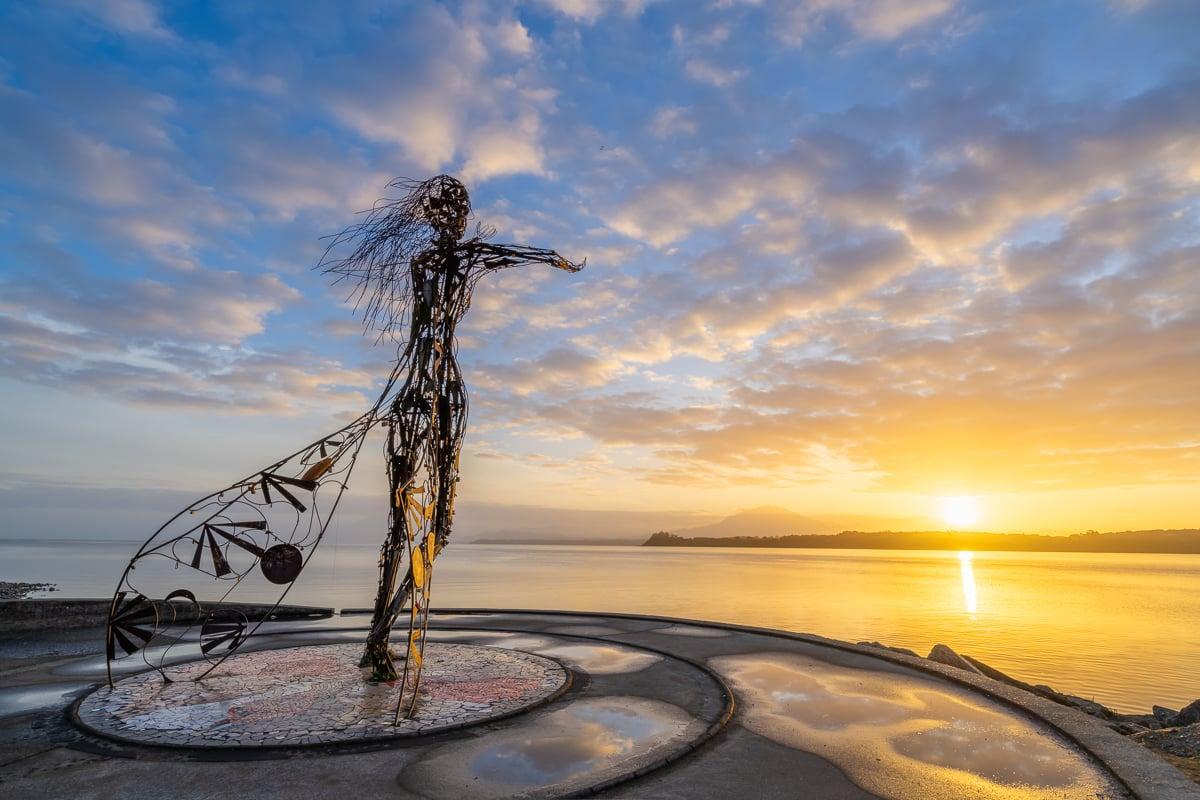
Sculpture in Puerto Varas. 18 mm, f/16, 1/200 sec, ISO 100
On this gorgeous sunrise shoot, my wife Carolina and I went to the local artwork, a sculpture of Princess Licarayen. I chose f/16 to get the starburst on the sun, but it was already in a bit of haze, so I didn't get a star. However, the shot captures the serene atmosphere perfectly, primarily thanks to the beautiful scattered clouds.
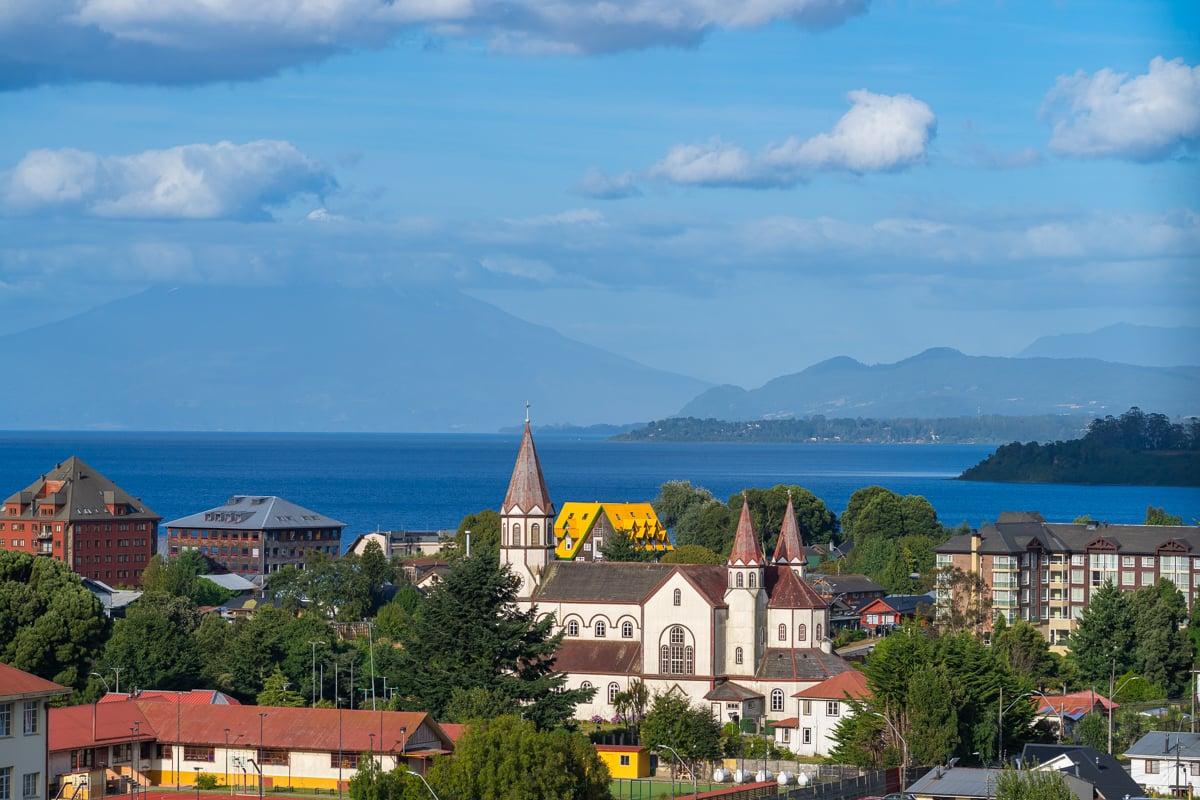
Church in Puerto Varas. 119 mm, f/10, 1/640 sec, ISO 200
As a massive fan of cityscapes, I always try to find defining features of cities and towns and put them together into one frame. For Puerto Varas, it's the church and the Osorno volcano. I spent about an hour pre-trip walking through the city on Google Street View to find the right vantage point. I got an idea of where it was taken from, and then we embarked on a scouting mission to find the right spot.This picture is about two streets from where I thought we might get the view, so I was pretty close. I shot it through the bars of a fence around a house on a hill. The owner came out to check what we were doing there, so we explained it to him. He was okay with us, and we kept on shooting. The volcano was mostly hidden behind clouds that day, but that happens. At least the very top is peeking through.
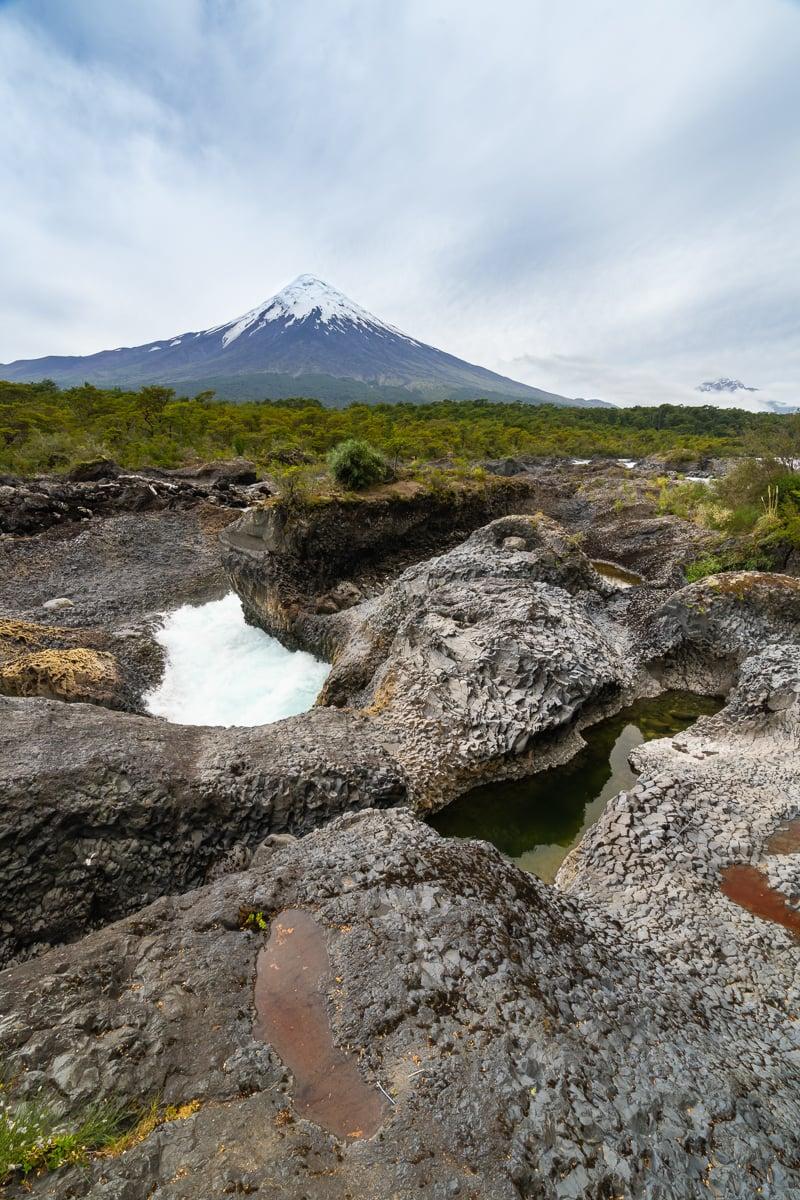
Petrohue Waterfalls. 16 mm, f/14, 1/40 sec, ISO 250
Petrohue Waterfalls was one particular location I was looking forward to photographing. Well, the weather was far from ideal. The snowcapped peak of the volcano blended with the omnipresent clouds, but most importantly, the river didn't have much water. I took advantage of it and incorporated the volcanic structure with a few ponds in the frame to gain foreground interest. One day, I'll return to get the photo I envisioned.
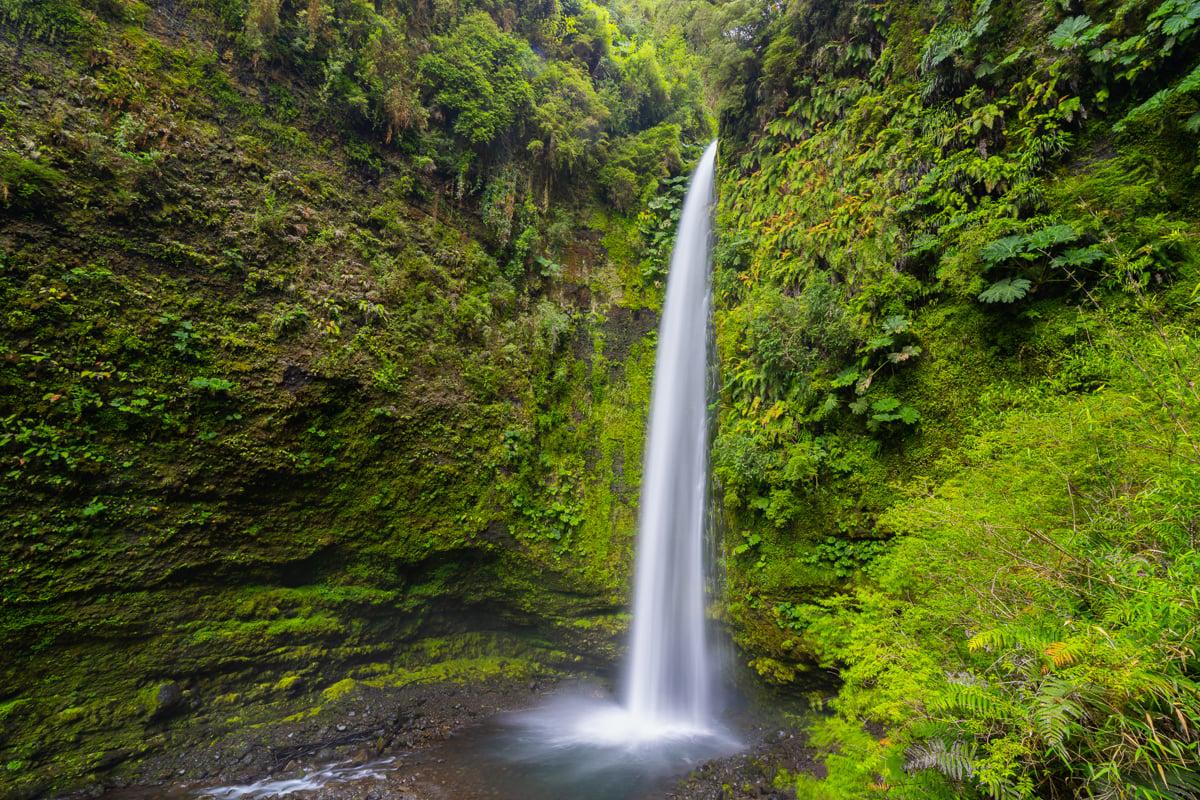
Las Cascadas Waterfall. 16 mm, f/16, 1 sec, ISO 100
I stumbled upon this waterfall when location scouting on Google Maps before the trip. It was near the waterfalls above, and since I knew the waterfall was hidden inside a forest, I knew that overcast weather would work in our favor. So we drove on a gravel road full of potholes for a while and then embarked on a short hike through the forest.
Before descending to the waterfall, there was an excellent vantage point where I put my tripod while all the other tourists were going down. It was a game of patience not to have many people in the frame. I used a polarized and turned it to let the greens sing and filter out reflections from leaves. No ND filter was necessary as I got a 1-second exposure at f/16 anyway. This is one of my favorite shots from the trip.
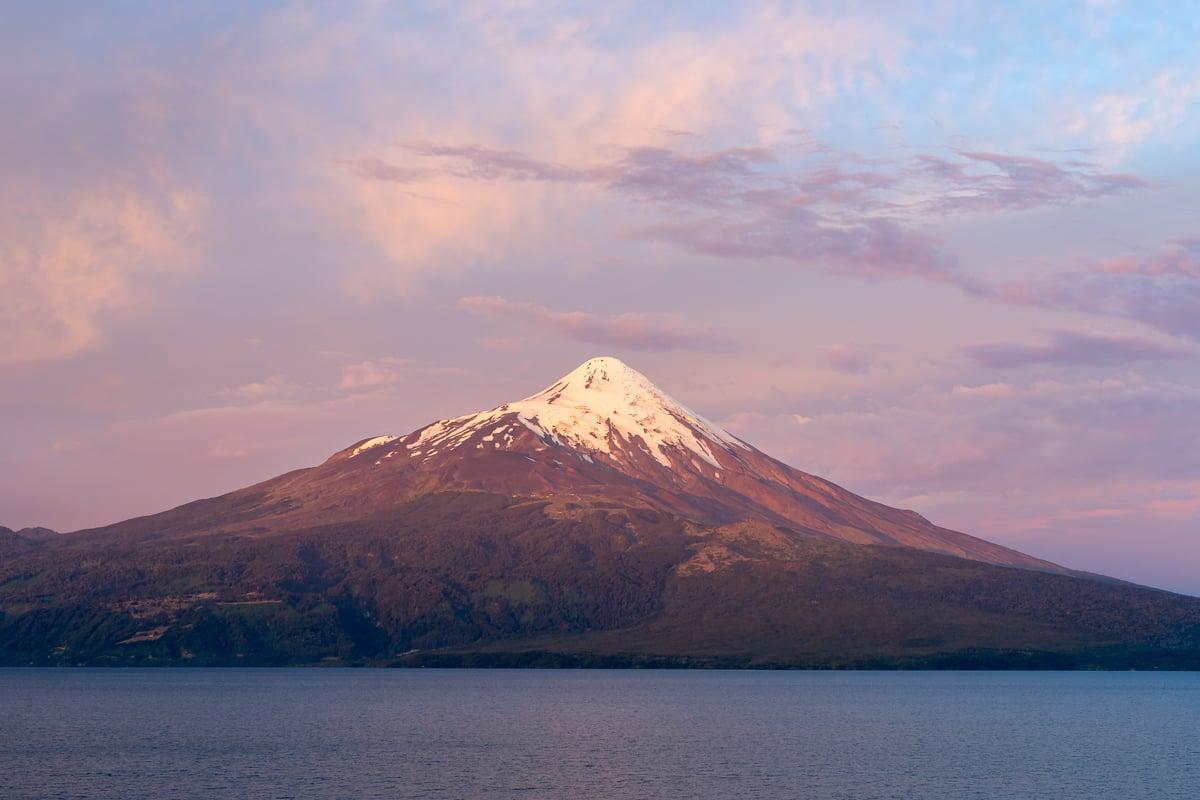
Osorno volcano at sunset. 61 mm, f/11, 1/10 sec, ISO 200
The next day, the clouds finally vanished, and we enjoyed some fine views from small villages around Lake Llanquihue. In the evening, we drove to a viewpoint of the volcano. Clouds started to roll in together with a storm, but it made up for some lovely clouds that caught colors as the sun was setting. That's my second favorite shot from the trip.
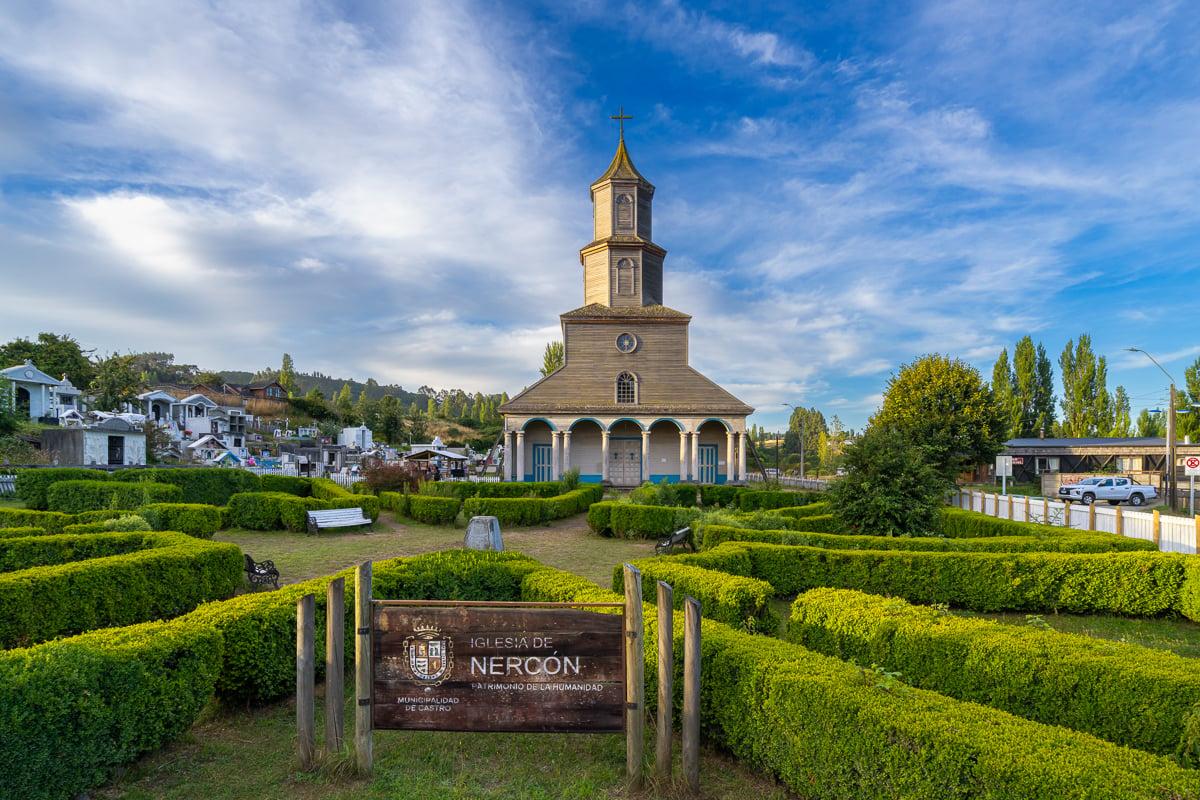
Nercón Church. 17 mm, f/14, 1/50 sec, ISO 250
Halfway through our trip, we moved to Chiloé Island for the second part of our adventure. Near Castro, the island's capital, is a Nercón Church that I liked for its garden that provides a foreground interest. The clouds were hiding the sun, and when I decided to call it a day and returned to the car (that pickup truck on the right - but driving this beast in Chilean, somewhat chaotic traffic would be an entirely different story), the sun popped through. I ran, quite literally, back to my spot to get this shot.
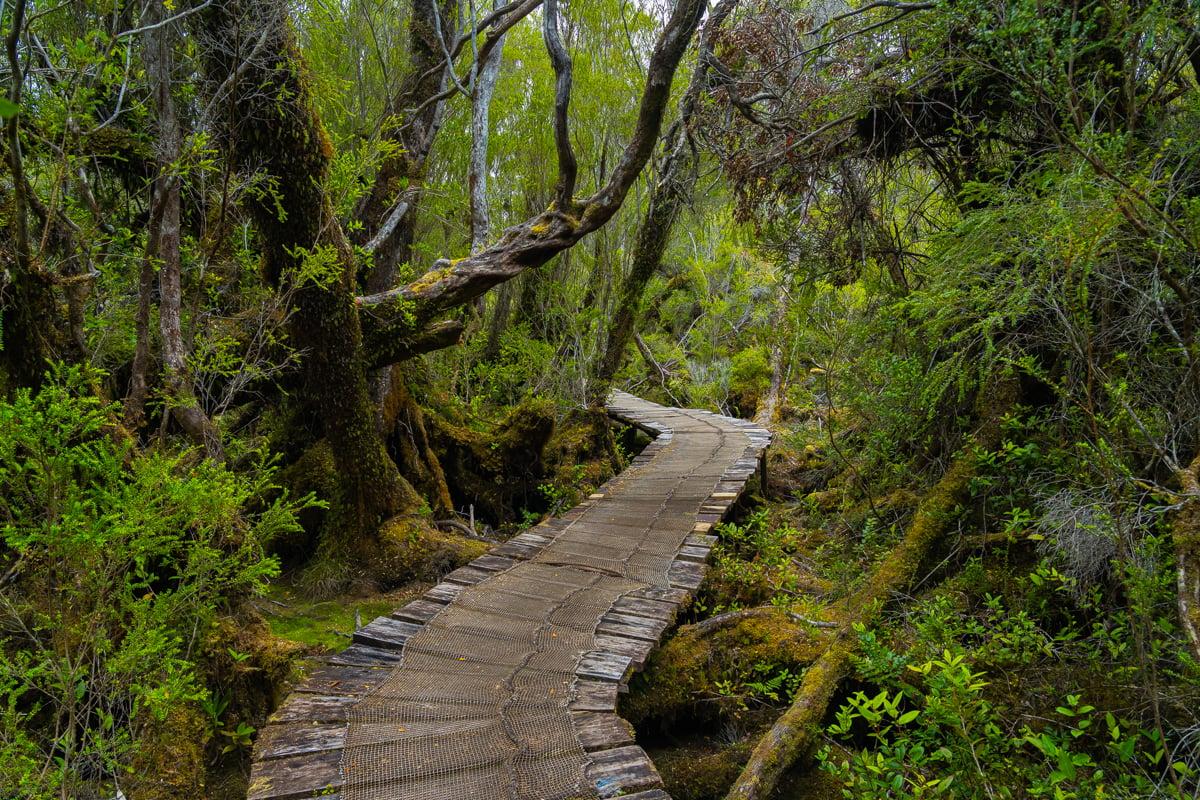
The El Tepual trail, Chiloé National Park. 24 mm, f/8, 1/60 sec, ISO 640
On a cloudy day, I decided to switch plans and go inside a forest where the overcast weather doesn't matter much. I had seen lovely images from the El Tepual trail in Chiloé National Park, so we drove there. After a one-hour hike, we ended up on a wooden boardwalk on this trail amongst the endemic tepú trees (Metrosideros stipularis). The winding path and dense forest were exactly what I was looking for! A polarizer helped me to get lovely greens by filtering out reflections.
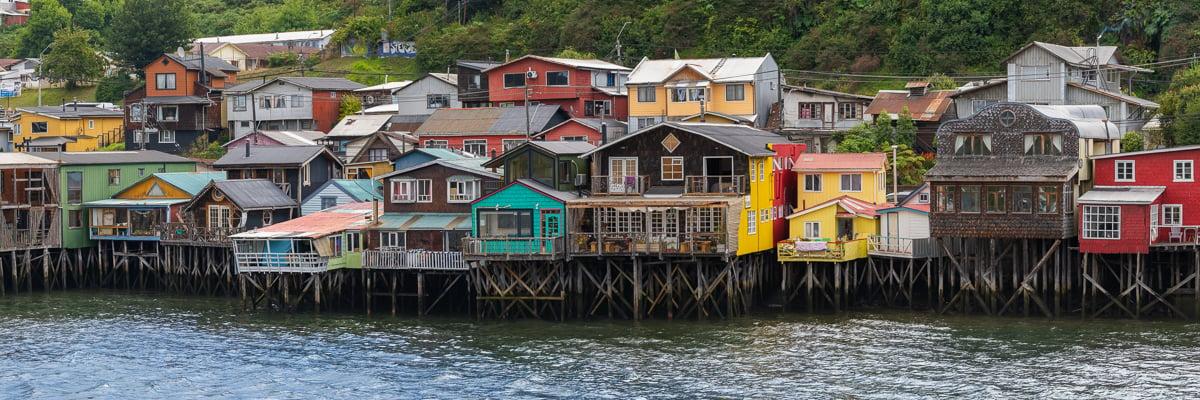
Palafitos in Castro. A panorama stitched from 12 vertical shots.173 mm, f/9, 1/500 sec, ISO 500
This is the location where I re-learned the lesson about the tides. The light suits sunrise and can also be good for sunset when backlit. But there was no water, and the houses stood in mud - not quite as I had imagined. During the few days we've been in the area, the higher tides were only in the afternoon when it was backlit, so I went telephoto to exclude the sky altogether.
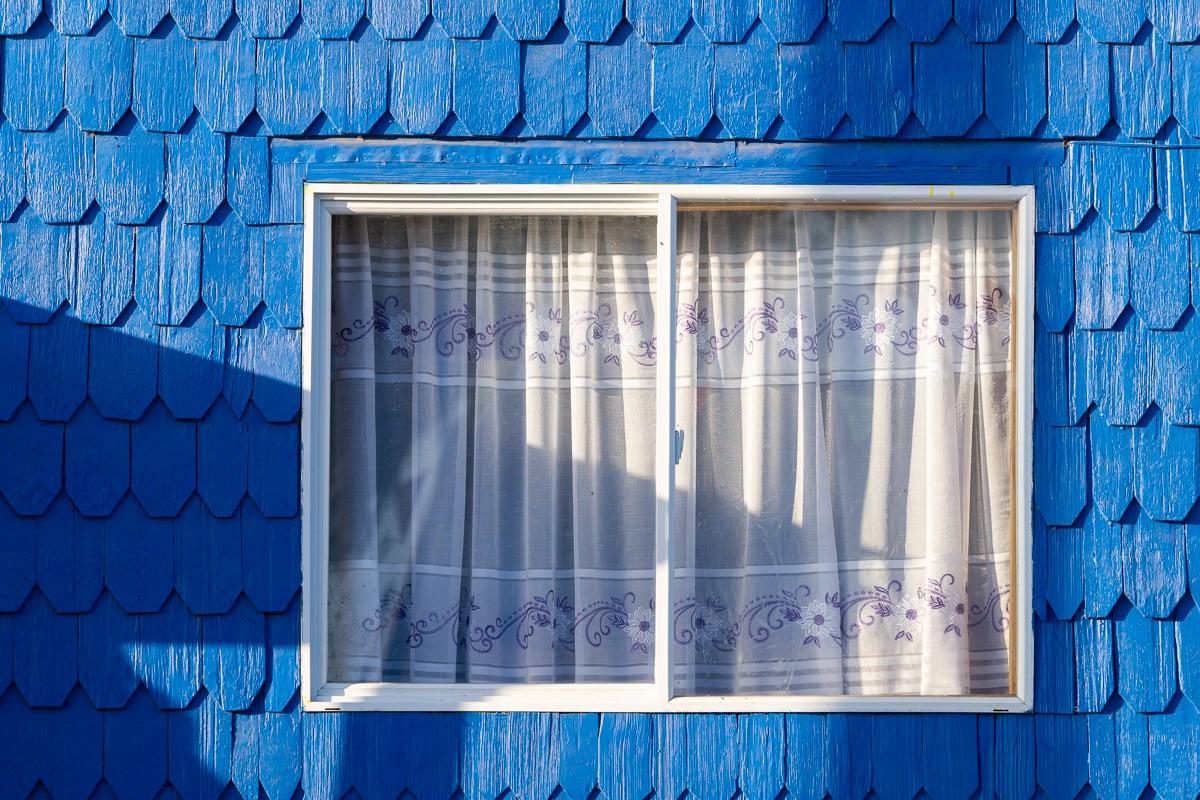
Detail of wooden tiles in Chiloé. 345 mm, f/8, 1/320 sec, ISO 200
Traditional houses on Chiloé are made of wood and have these specific tiles not only on rooves but also on the facades. This unique architectural feature, combined with an enticing blue color and good light, got my attention and resulted in a decent, intimate photo.
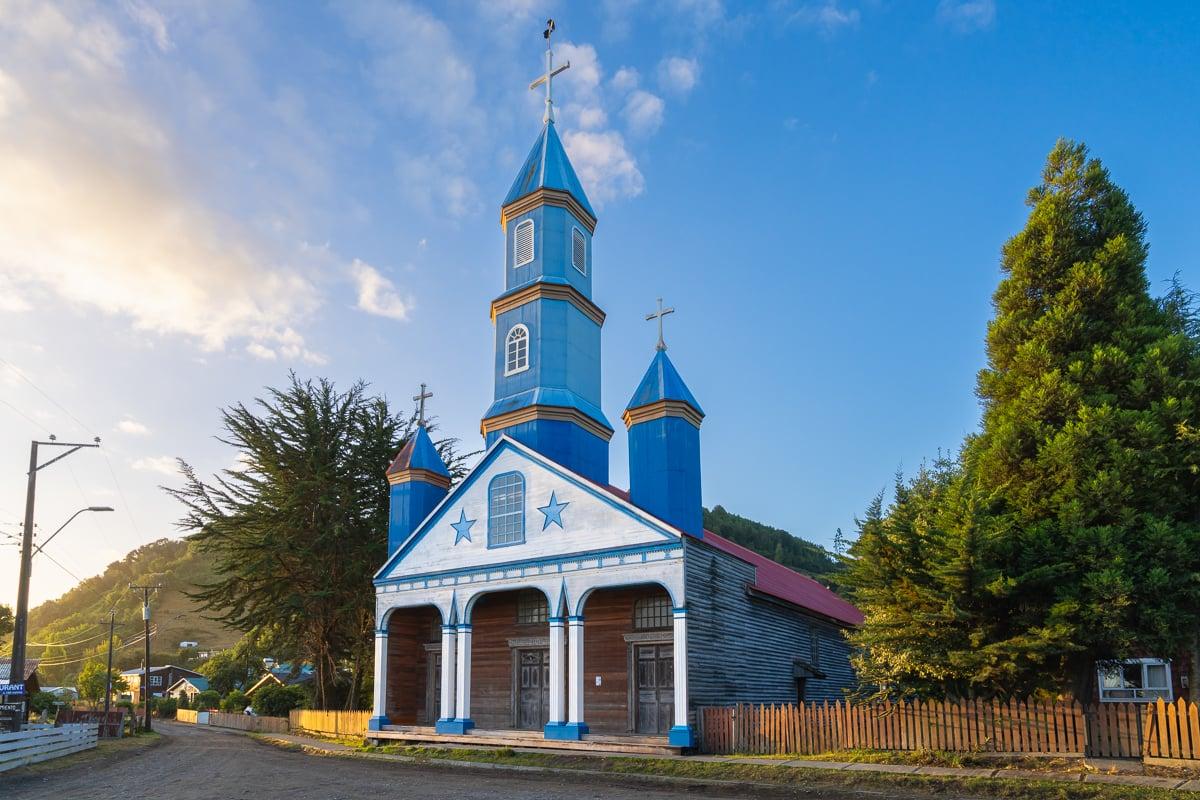
Tenahué church on Chiloé. 19 mm, f/11, 1/125 sec, ISO 200
The church in Tenahué is arguably one of the most beautiful churches out there. It's also one of a few where power lines or parked vehicles don't get into your composition. The soft, warm light of the setting sun was hitting the front of the church several minutes before sunset, and it turned out lovely.
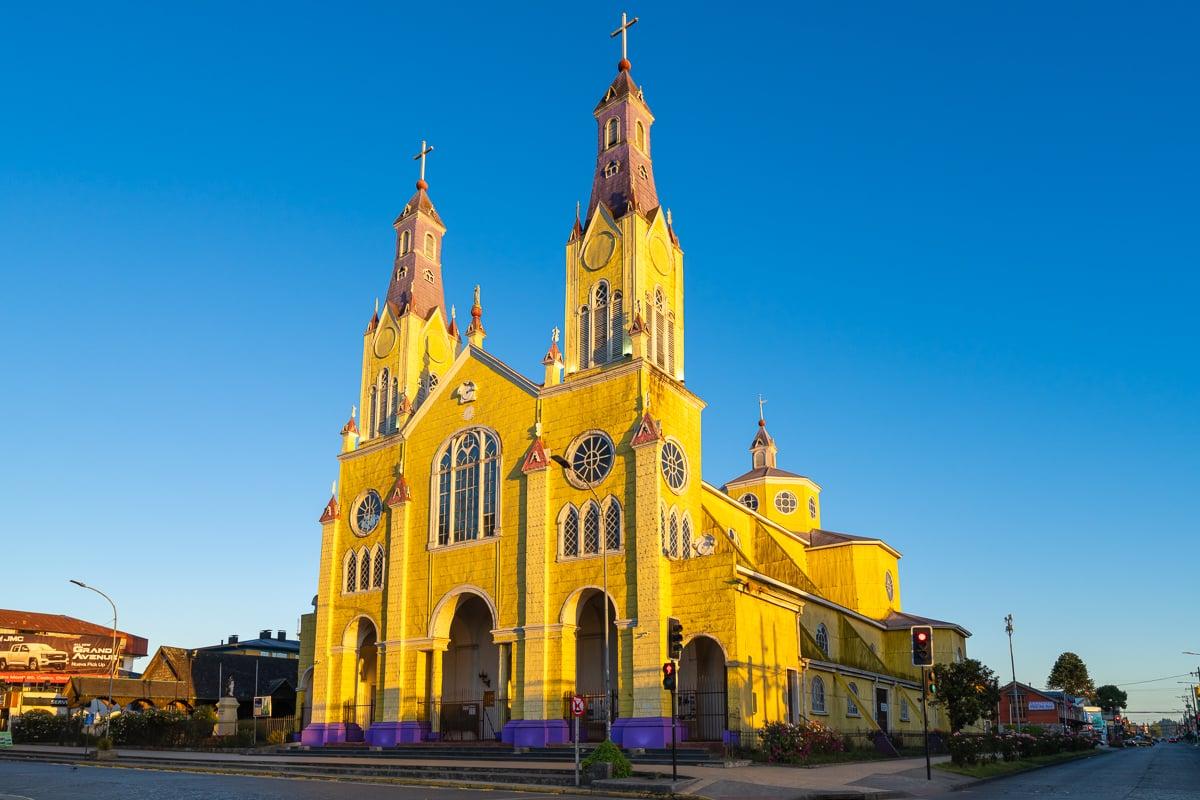
San Francisco church in Castro, Chiloé. 22 mm, f/11, 1/125 sec, ISO 250
Photographing the iconic church at the main square in Castro, Chiloé's capital, was a frustrating disappointment initially. We set out there to shoot it at sunset and blue hour, but there was a celebration on the square, tons of people, and you could hear four different music playing at the same time. My senses were overwhelmed, and it was impossible to shoot what I wanted.
So we went there again early in the morning the following day, and in just five minutes, we got what we came for as the church bathed in soft light and nobody was in the streets.
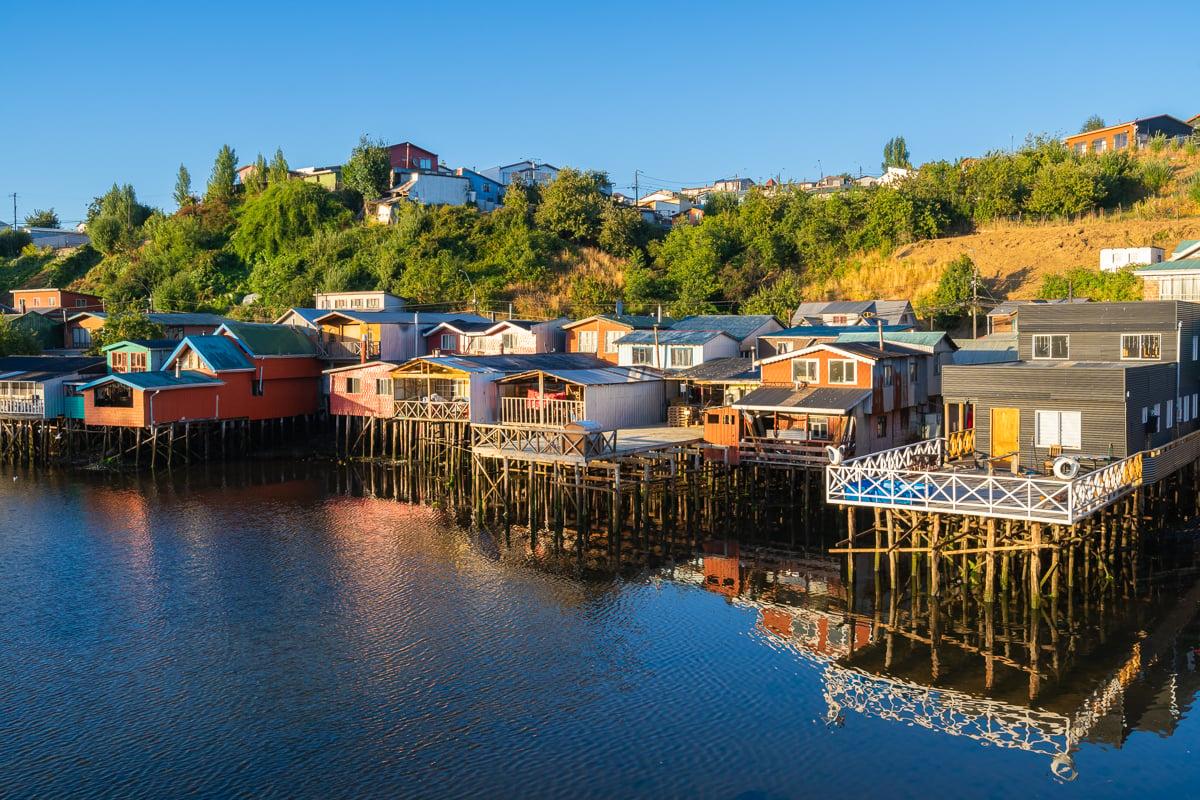
Palafitos in Castro, Chiloé. 32 mm, f/14, 1/100 sec, ISO 200
I discovered another set of palafito houses. But these were not connected to a sea but were standing on a small lake. The tides were no longer a challenge, and on the next-to-last sunrise, I was happy to shoot the palafitos in the ideal lighting conditions (and on water, not in mud).
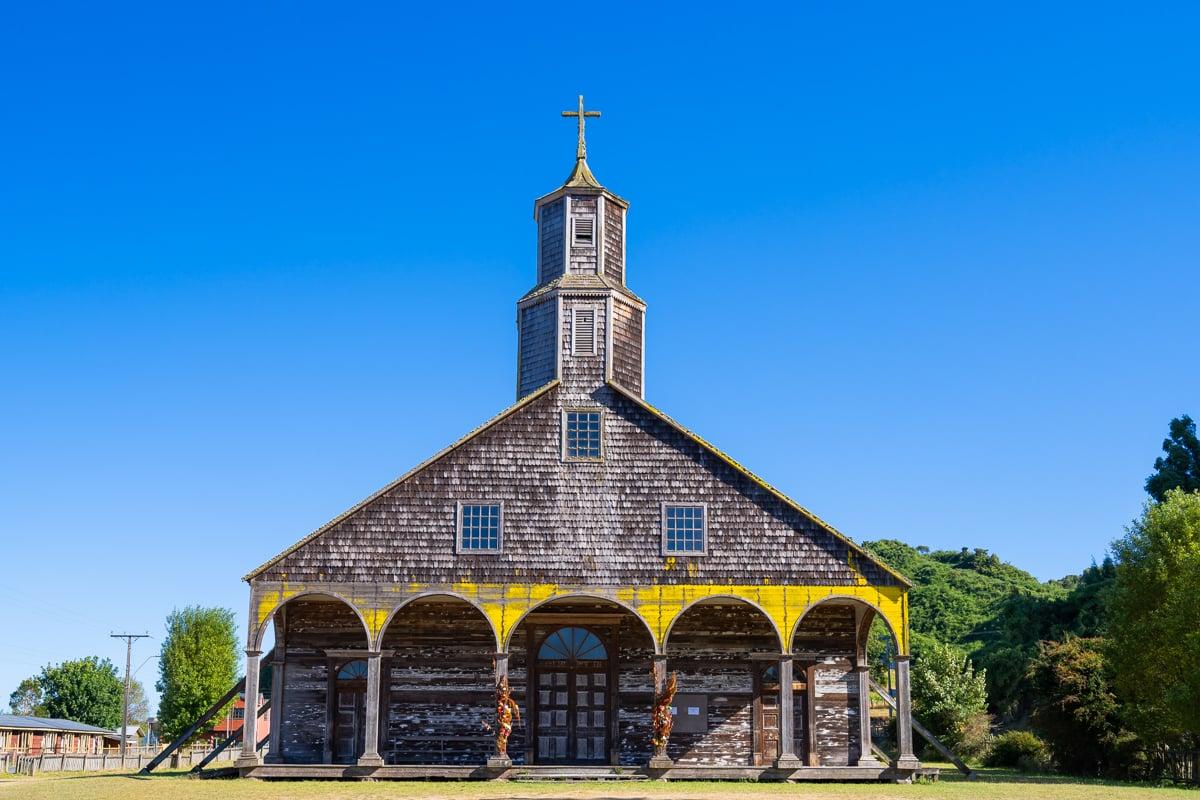
Quinchao church on Quinchao Island. 32 mm, f/11, 1/125 sec, ISO 100
I learned that straight-on shots of buildings work pretty well, so I used this technique in one of the compositions at this large wooden church. The important thing is to keep the vertical lines vertical as much as possible. There was spacious parking in front of it, with nobody around, so I could stand reasonably far from the church and keep enough space around it to make up for the vertical corrections I did in Lightroom afterward.
Photo tours in 2024
Join me on an unforgettable photographic journey:
- Czech Republic (May 15-25, 2024)
- Cappadocia, Turkey (September 13-18, 2024)
- Scotland, UK (October 4-12, 2024)
- Iceland (November 25 - December 3, 2024)
I hope you enjoyed some of the photos and the stories behind them.
I've been dreaming about this trip for several years. I decided the best time to do it was now, and it was fantastic!
We could reconnect with Carolina and discuss things other than the usual household logistics without our little ones interrupting us. What a change! 10 out of 10 parents of small kids recommend it!
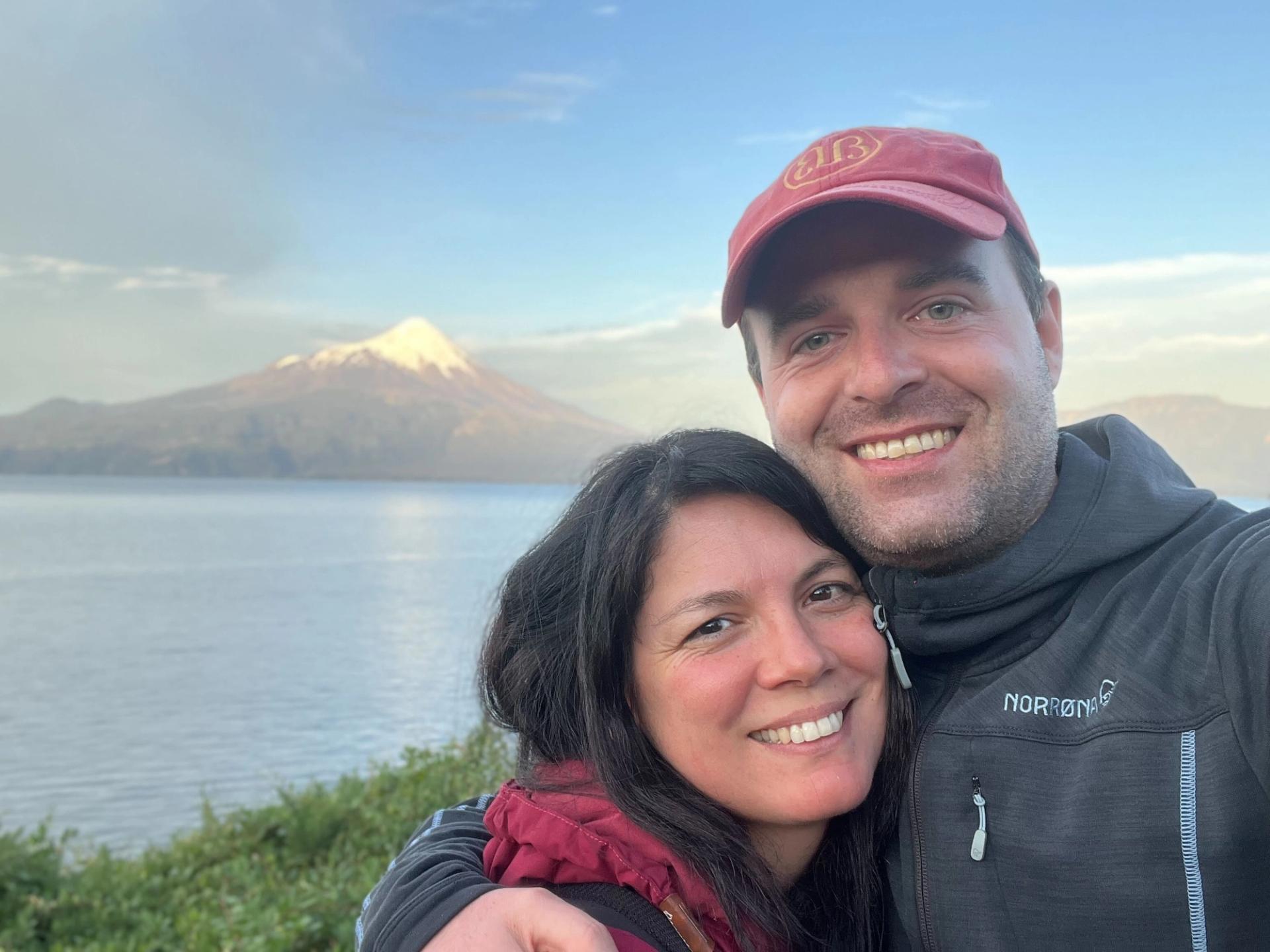
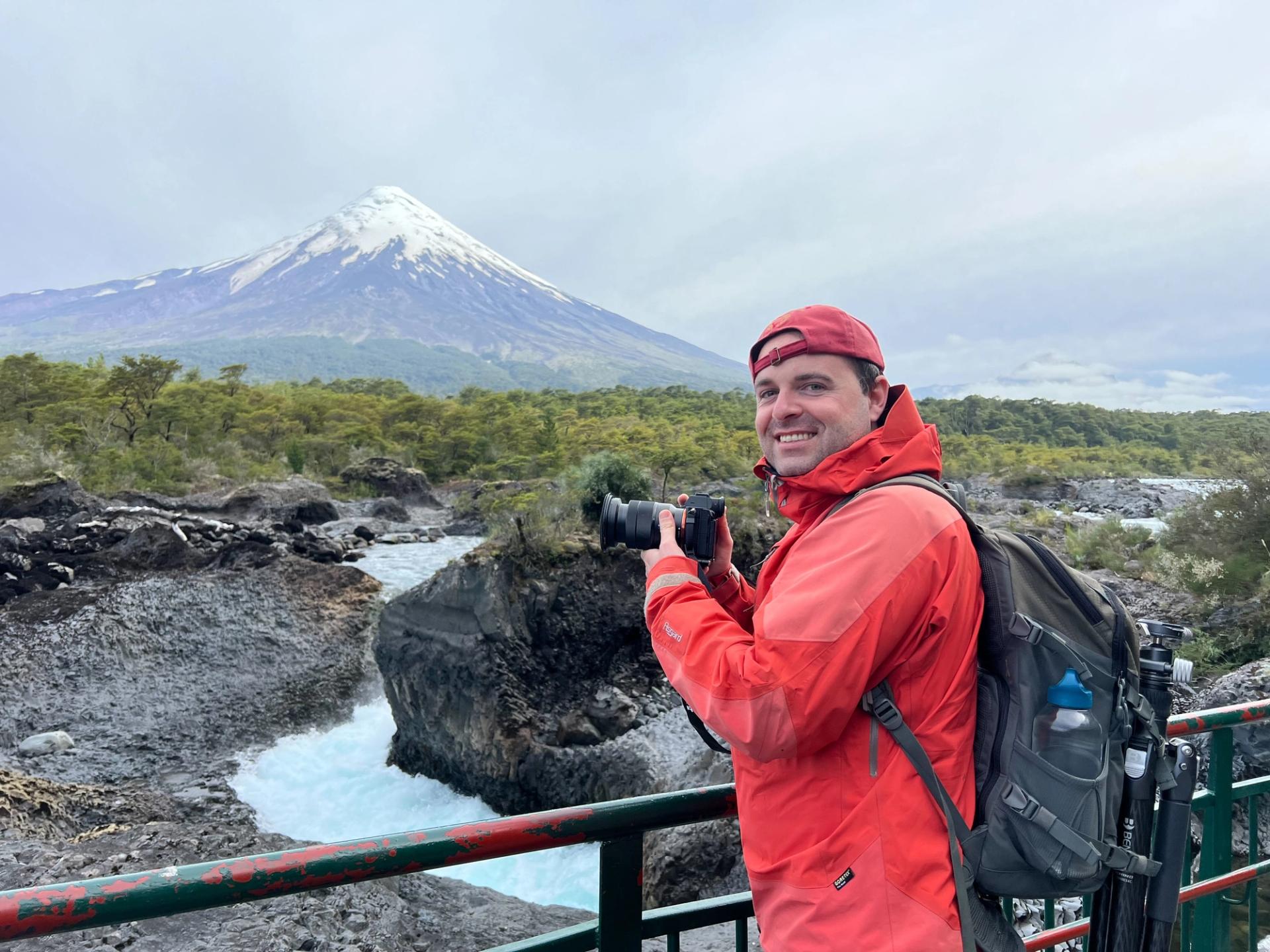
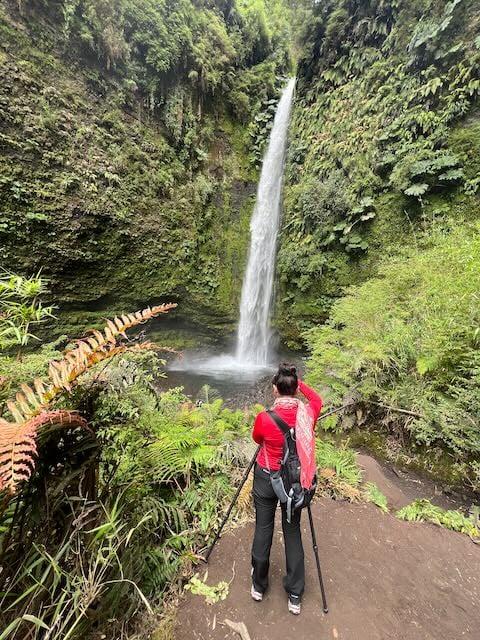
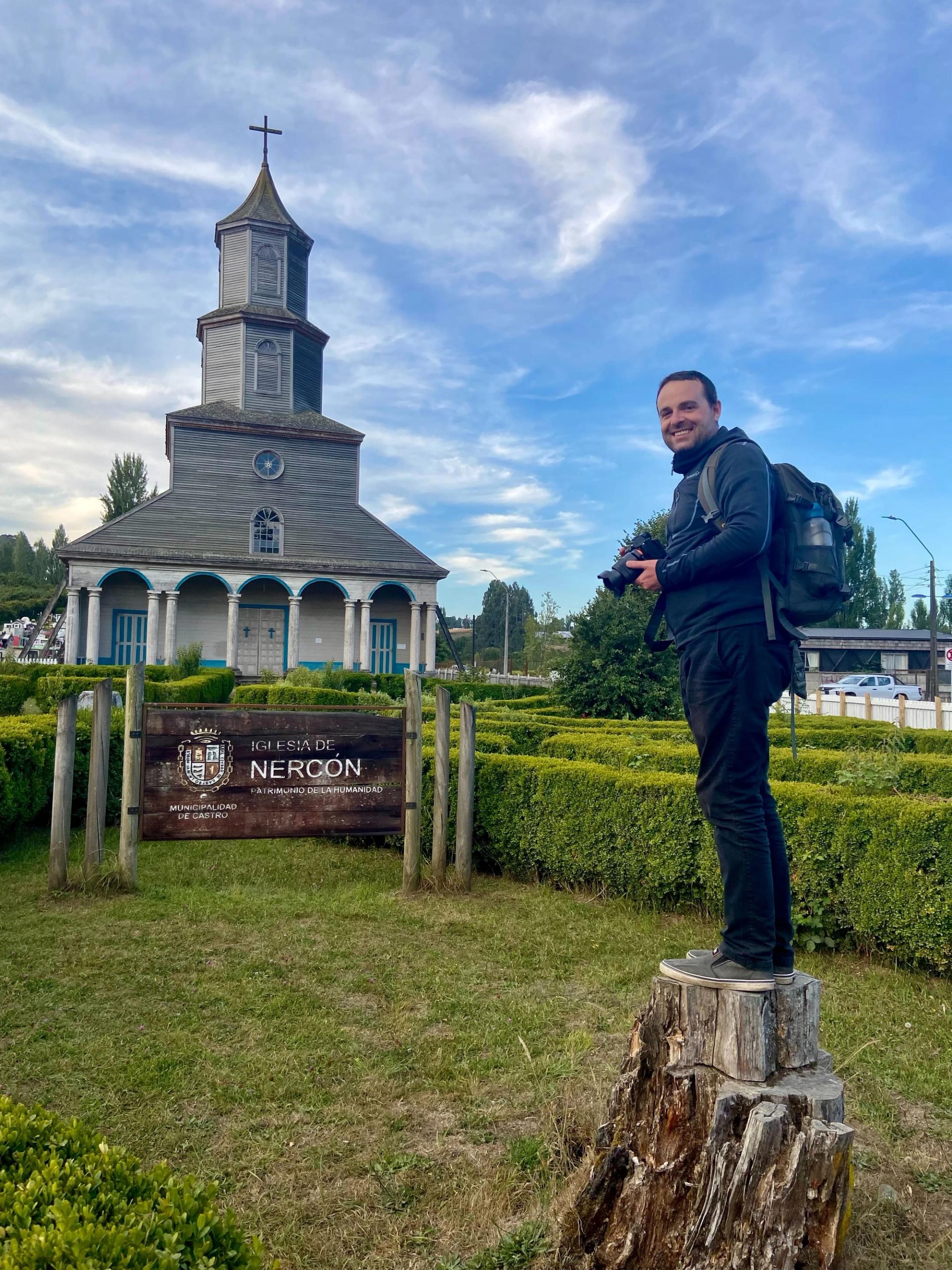
Recently, I've been trying to embrace the mindset of not postponing my dreams because one never knows how much time we have left on the planet. Additionally, people later in life tend to regret things they didn't do more than the things they did do in life, so there's no risk :-)
What's the one thing you've been dreaming about and still need to do?
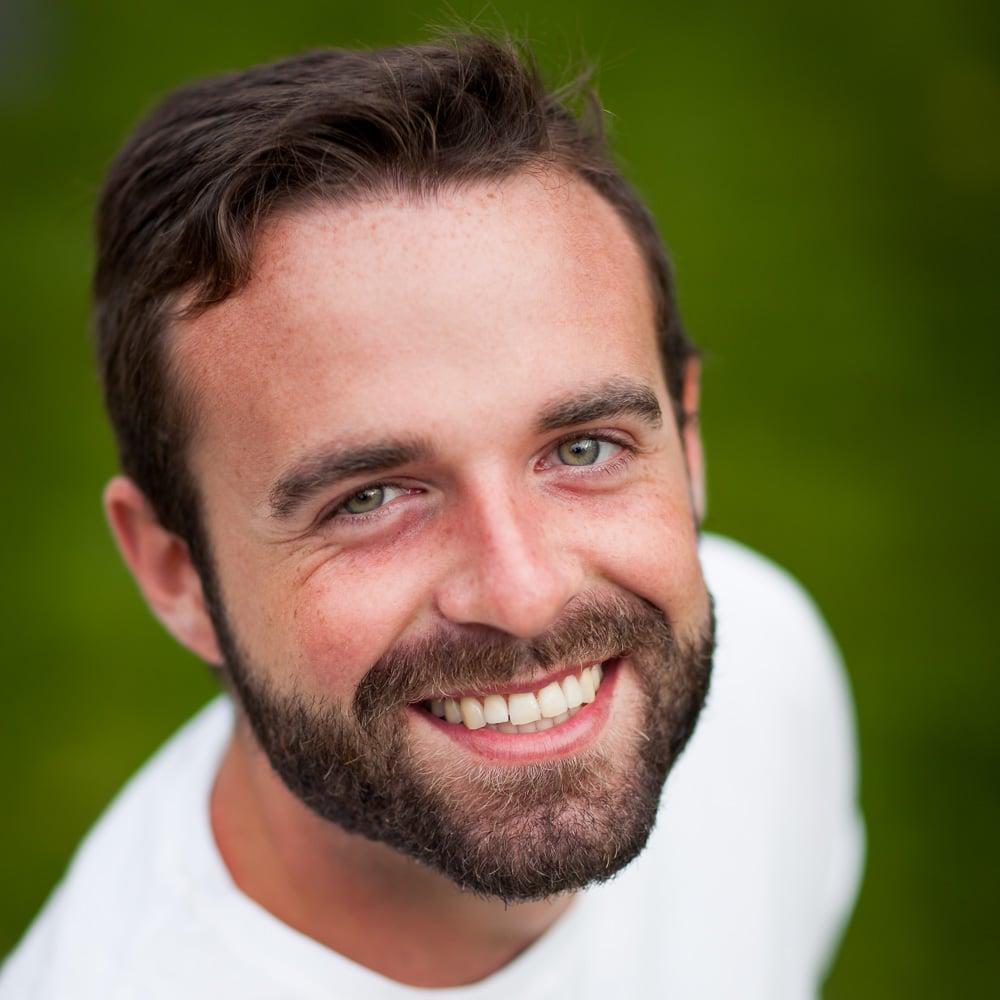
PS: Psst, we started to miss our kids about three hours after leaving the house :-)))
Enjoyed this? Get the next one.
I send tips like these about once a month. Free, no spam, unsubscribe anytime.
Browse all past issues