✂️ Come home with your photos already edited
My culling routine on the road, the 2027 calendar, and Uzbekistan dates.
View original emailSeptember 2026 newsletter
I'm writing from Prague, a week after turning 37.
We waited to celebrate until Carolina's parents arrived from Chile, so the whole family could sit around one table at home. It was worth the wait.
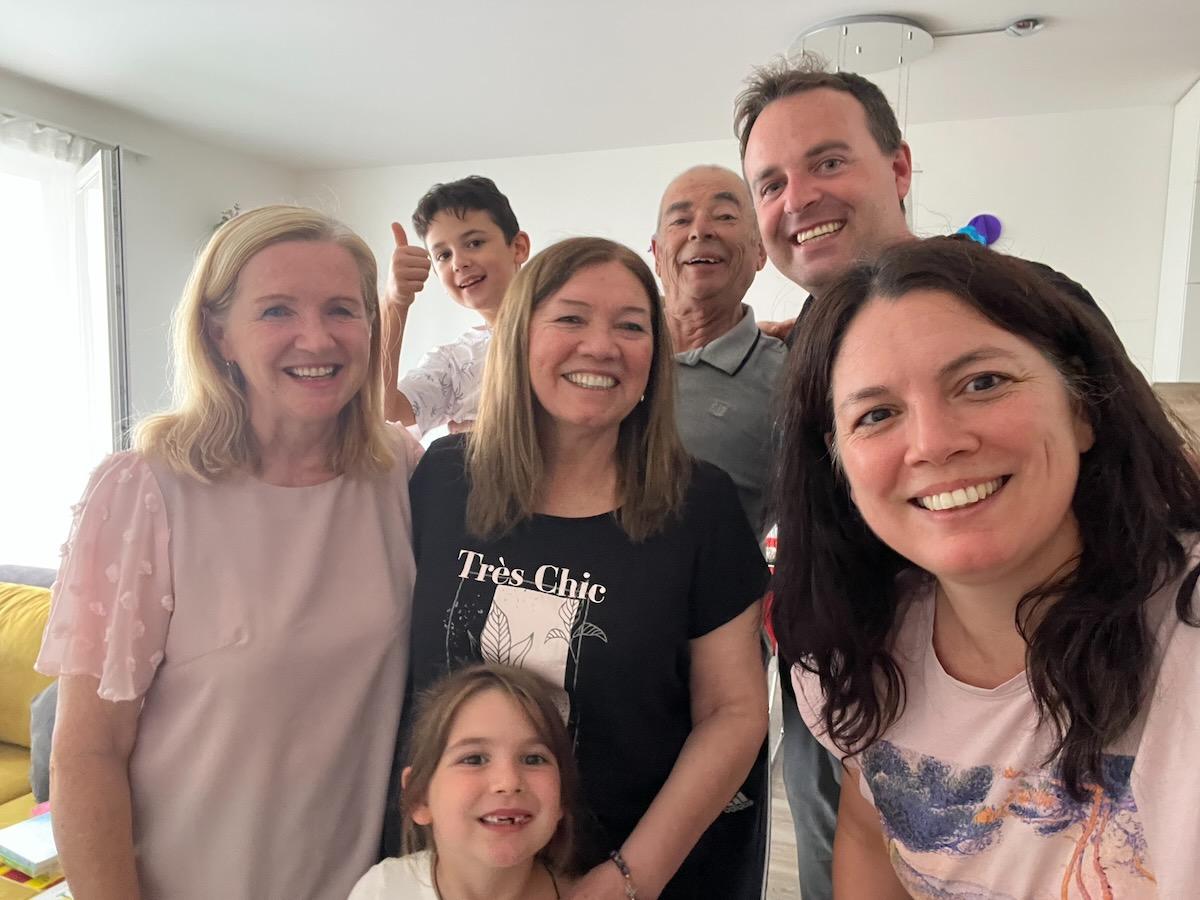
Thirty-seven, with my family. Prague, September 2026
The main present was a new shaver, and there is a story behind that.
About two and a half years ago I stopped wearing a beard. My daughter was two at the time, and she had stopped giving me kisses because it scratched. No argument about style has ever settled anything that fast.
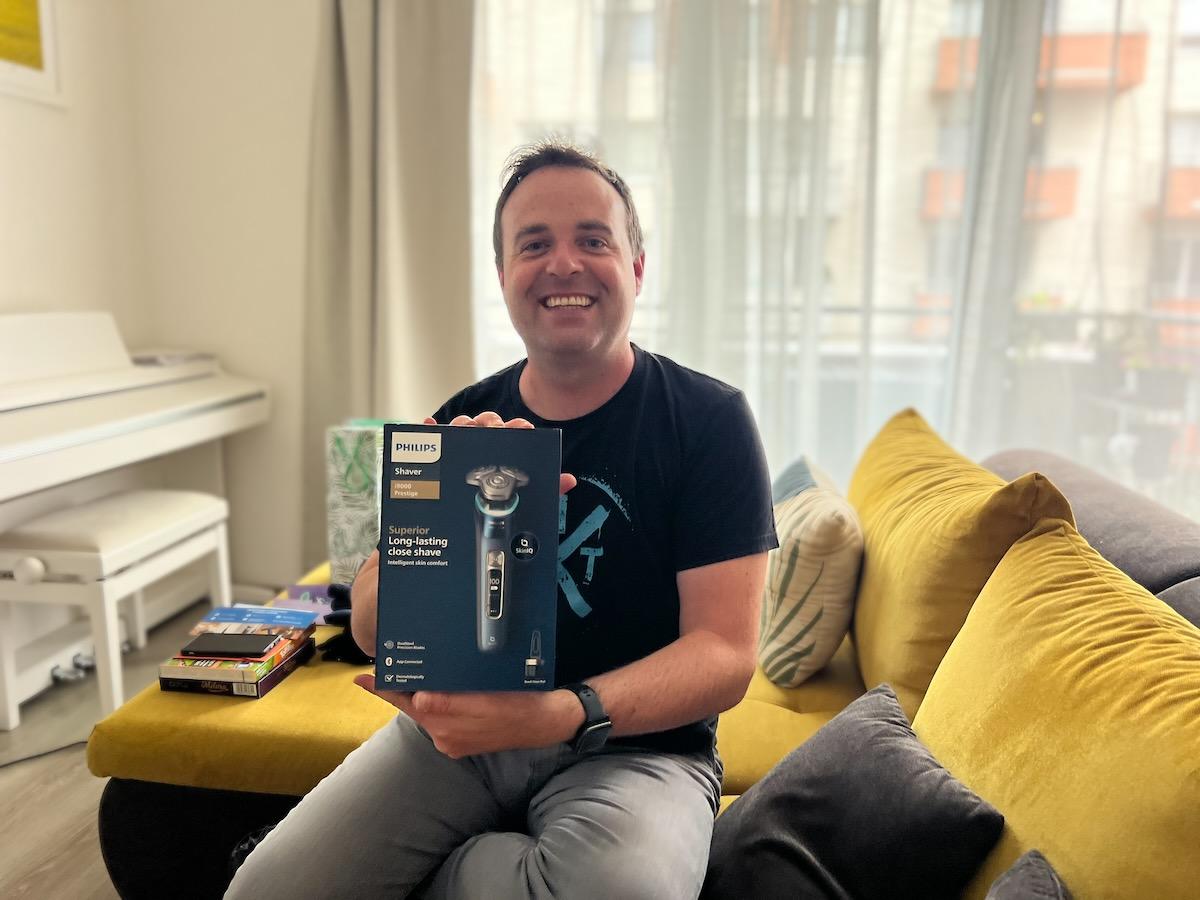
The present, and the reason for it
So this issue is about cutting, in the photographic sense. How I cull my pictures on the road, so the edit is not waiting for me when I get home. A handful of abstract frames from this year that survived a very different kind of selection. And the 2027 calendar, which is the hardest cut I make all year: twelve photographs out of everything.
Plus the Uzbekistan dates. I promised you the whole tour by the end of September. The itinerary and the descriptions are done, the prices are not, and I would rather be late than guess.
The dates, though, I can give you today.
✂️ Why my photos are edited before I get home
Coming home from a trip with 1,500 photos and sitting straight down to edit them is every photographer's plan. It rarely happens.
There is work waiting, family, a week of small emergencies. Something is always more urgent than the pictures.
And a to-do item that says "Edit the Peru photos", with 2,034 frames behind it, is not a job for one evening. Part of you quietly decides not to start.
Meanwhile, the people who wanted to see them wanted to see them the week you got back. Six months later, nobody asks.
After more than ten years of doing this for a living, here is the workflow that fixed it for me.
Cull while you are still there
I travel with my MacBook Pro, or at least my iPad Pro. At least every other day, I download the cards. That is my backup routine anyway, so while the files copy, I pick the 2 to 5 frames from each day that I am happiest with.
Then I either star them for later or edit them on the spot.
Either way, I win. If I edit as I go, I come home from a two-week trip with 40 favorite photos already finished. If I only starred them, I come home with 40 photos waiting for an edit. That is one or two evenings, it sounds doable, and so it actually gets done.
By the numbers: Oman and the UAE, February 2026, 16 days
- Photos taken: 1,752
- Photos edited: 172
- Edited after I got home: 0
Everything finished from that trip was finished on the road, and on that one I edited well beyond my usual 2 to 5 a day. I have opened the folder since, but I have not edited a single new frame.
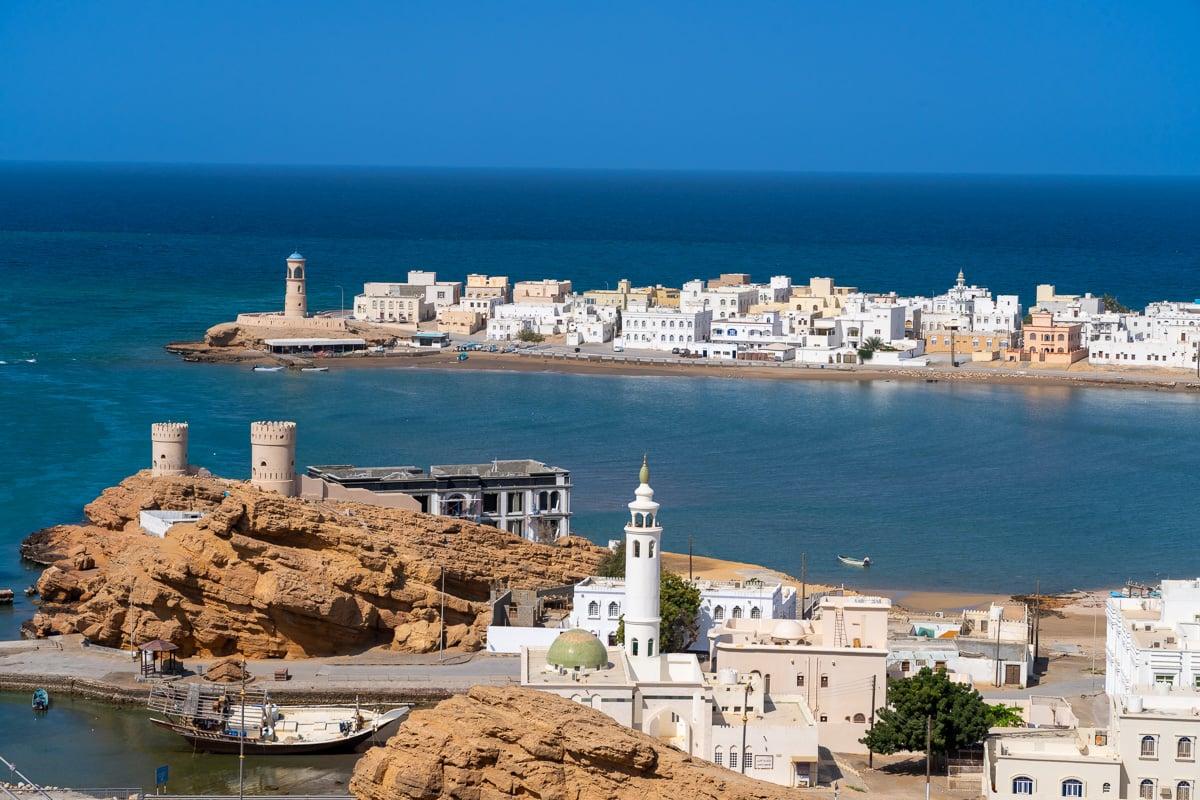
Sur, Oman. 82 mm, f/11, 1/320 sec, ISO 100
"But I will miss some good ones"
Almost certainly. But only you will know that. Your friends will not.
Honestly, nobody wants to scroll through 150 photos of someone else's holiday. They will happily look at 40.
Post an album of 98 on Facebook, and my guess is that the 90th photo is seen by maybe 3% of the people who opened it. More is not better. Usually it is the opposite.
And the frames you skipped are not lost. They are waiting.
Whenever I finally go back to an older trip, I find photos I had completely forgotten, and some of them are better than the ones I picked at the time. That second look is one of the nicer surprises in photography.
Why an iPad is enough
My iPad syncs with Adobe Creative Cloud. A star or an edit made in Lightroom Mobile is saved as metadata, not baked into the file, so when I open the same photo on my computer at home, I can keep changing that edit without losing a thing. Many mobile editors cannot do that.
When the internet at the destination is poor, the upload simply waits until I am home.
The second cut, and the elephant
Part of my income comes from licensing photos through stock agencies. It is a numbers game (and a quality game). The more edited frames I submit, the more the agency editors have to choose from, so eventually I want to go back to every trip and finish everything that could sell.
That is a very different selection from the one I show my friends. My 2023 trip through the American Southwest: 2,574 frames in three weeks, 1,430 edited, 552 now in stock agencies.
If you have ever wondered what the strangest photos I have licensed look like, hit reply. If enough of you want it, I will write it up with examples in a future issue.
A backlog that size needs a trick, and mine is small. My to-do list never says "Edit the Bratislava photos". It says "Edit 5 photos from Bratislava".
Time management people call it eating the elephant one bite at a time. Five photos is too small to put off. Once I have done five, I am usually on a roll and do another twenty. On the evenings when I am tired, I do five, and I have still done the day's job.
The point is that it comes back. "Edit 5 photos from Bratislava" sits on my list every weekday, not just once, until the whole trip is done. Five a day does not sound like much, but it is a hundred photos a month.
Try it on your next trip
- Bring something to cull on: a laptop or a tablet.
- Every other day, download and back up your cards.
- While they copy, pick 2 to 5 favorites from each day.
- Star them, or edit them right there.
- At home, finish the 40. One or two evenings.
- Everything else goes on the list as "Edit 5 photos from…", every weekday, until the trip is done.
🇺🇿 Uzbekistan: 22 October - 2 November 2027
I have wanted to go to Uzbekistan for about ten years. I have never been anywhere in Central Asia, and Uzbekistan feels like the right place to start.
It also fits where my photography has drifted. Over the last few years I have spent less time with landscapes and more with cities and architecture, and historic architecture is something Uzbekistan has in abundance.
Because it will be my first time, I am not leading it alone. My friend Petr Maděřič is a guide with Matkali, the small-group travel company I run in Czechia. He has taken our clients through Uzbekistan for five years and goes back every year. Petr handles everything on the ground, and I handle the photography.
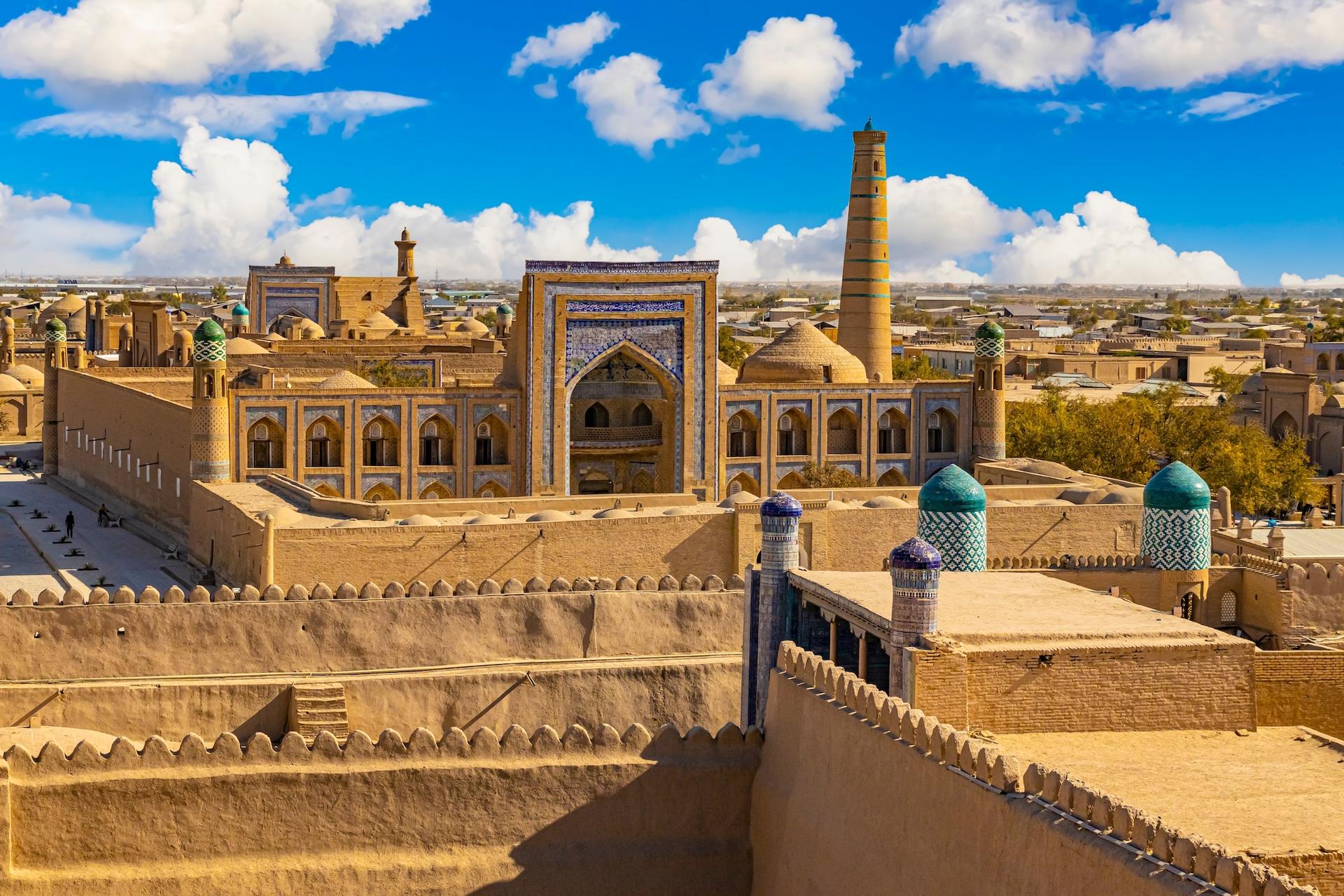
Khiva, Uzbekistan
For photographers, and for the people they travel with
Like Morocco this year, this tour is built for couples where one person shoots and the other does not. During the day we do everything together: the old cities, the bazaars, the workshops, a day in the mountains. Cameras come along, but nobody stands behind a tripod.
The photography happens at the edges of the day. On five mornings, none of them compulsory, we are out for the blue hour before sunrise. Most evenings we work golden hour into blue hour, and anyone not photographing has a tea house, a terrace or a quiet evening in the hotel instead.
Three things I am looking forward to most
- Islamic architecture at the right hour. Registan Square empty at sunrise, the tiled corridor of Shah-i-Zinda at first light, the Kalyan minaret in Bukhara at both ends of the day. Each one timed for the hour that suits it, not the hour the coaches arrive.
- Craft being made in front of you. A family ceramic workshop and a carpet loom in Gijduvan, a water-powered silk paper mill near Samarkand, bread stamped by hand in the Siab bazaar. This is where the environmental portraits come from.
- A second, unexpected century. Tashkent closes the trip in concrete and cobalt: metro stations that could not be photographed legally until 2018, and Soviet modernist buildings that joined the UNESCO World Heritage List this year.
We travel from 22 October to 2 November 2027, twelve days west to east from Khiva through Bukhara and Samarkand to Tashkent, with 6 to 10 guests. We go in late October for the low, warm light, and because sunrise then comes at a civilized hour, around seven.
The price. We are still finishing it, and I would rather not promise a date, because I will be in Morocco on a tour for the second half of October. It will be close to all-inclusive, as in Morocco, and everyone on the interest list hears it first.
The full day-by-day program is on the Uzbekistan tour page . If you would like the price the moment it exists, email me.
🔷 Looking for shapes, not places
Abstracts are not my main discipline, and I rarely set out to take them. But when I walk past something and see potential in it, I give it a few minutes and look for compositions.
Sometimes I come away with nothing I like. Sometimes something works. Either way it trains the eye, and that is never wasted.
What I look for is simple: repetition, contrast, color, lines and shapes. Here are five frames from this year, most of them from ordinary apartment blocks in Vienna.
My favorite is a tilted apartment block against a completely clean sky. The blue works as a layer of its own, and the shaded underside of the balconies picked up a similar blue tint, so the two halves of the frame talk to each other.
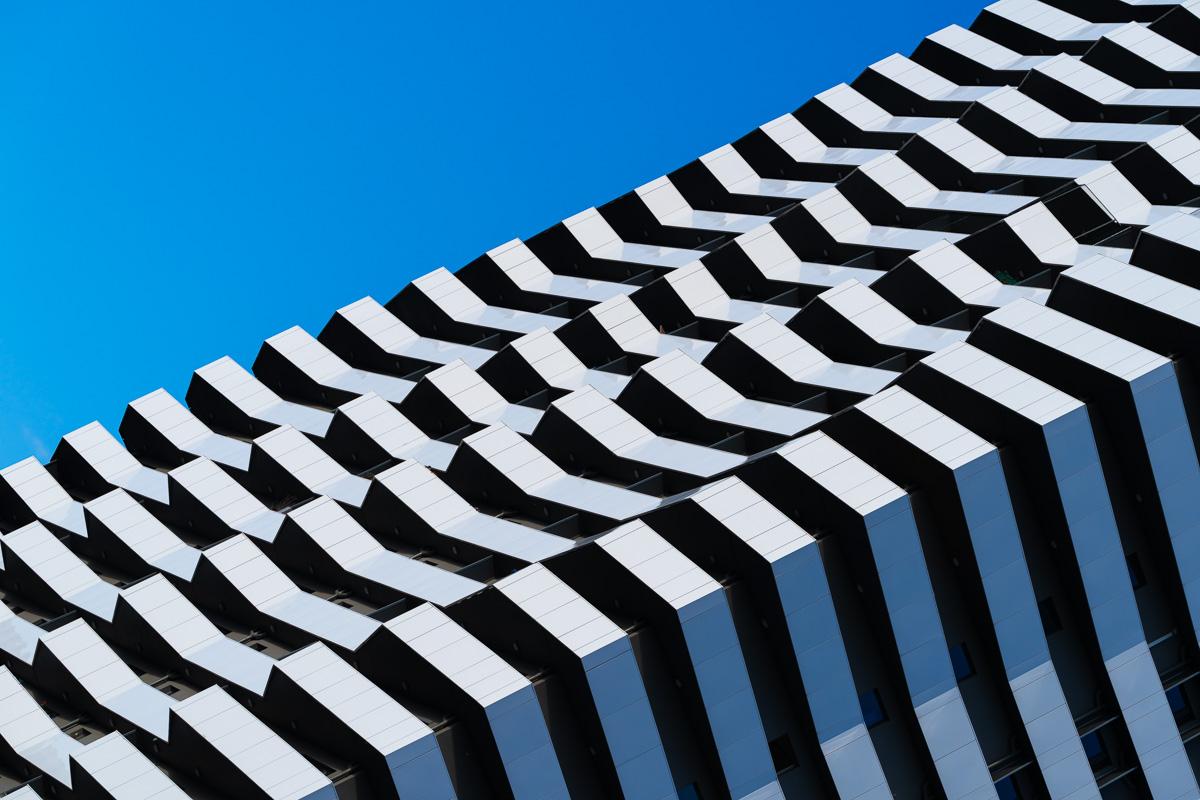
Balconies against the sky, Vienna. 114 mm, f/11, 1/250 sec, ISO 160
What these five have in common
- A telephoto lens. Everything here was shot between 65 and 400 mm. The long lens isolates a slice of the building and flattens it into a pattern.
- No edges. There is no horizon and no end to the building. The pattern runs past every side of the frame, so it feels endless.
- Diagonals. Most of the frames are tilted. Turn the camera a little and a static facade starts to move.
- A limited palette. Mostly white, gray and black, with one color at most: the blue sky, the green roof tiles.
- Repetition with one break. A dormer window, the dip of a wave, a line of symmetry. A perfect pattern is wallpaper. A pattern with one interruption is a photograph.
- Hard sun. Most of these were taken in full daylight, the light I would avoid for landscapes. Here it is exactly what you want, because the shadows make the contrast.
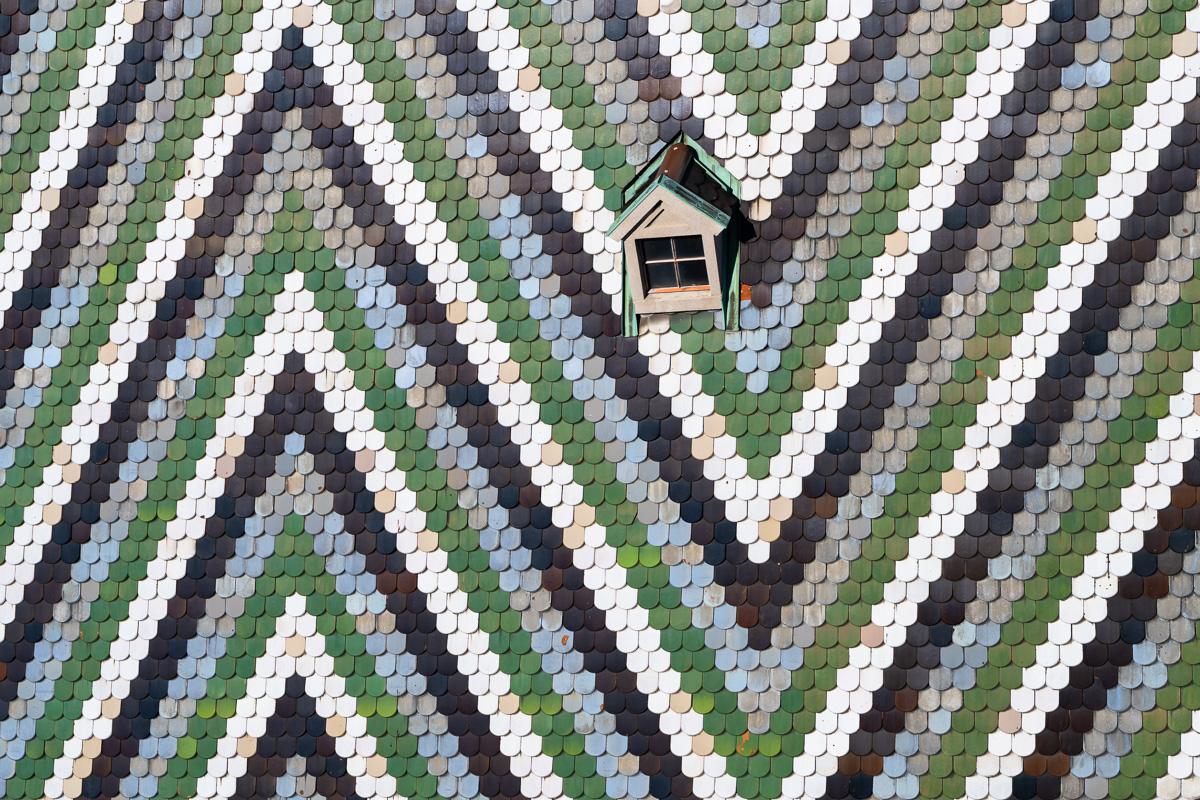
The roof of St. Stephen's Cathedral, Vienna. 65 mm, f/8, 1/640 sec, ISO 100
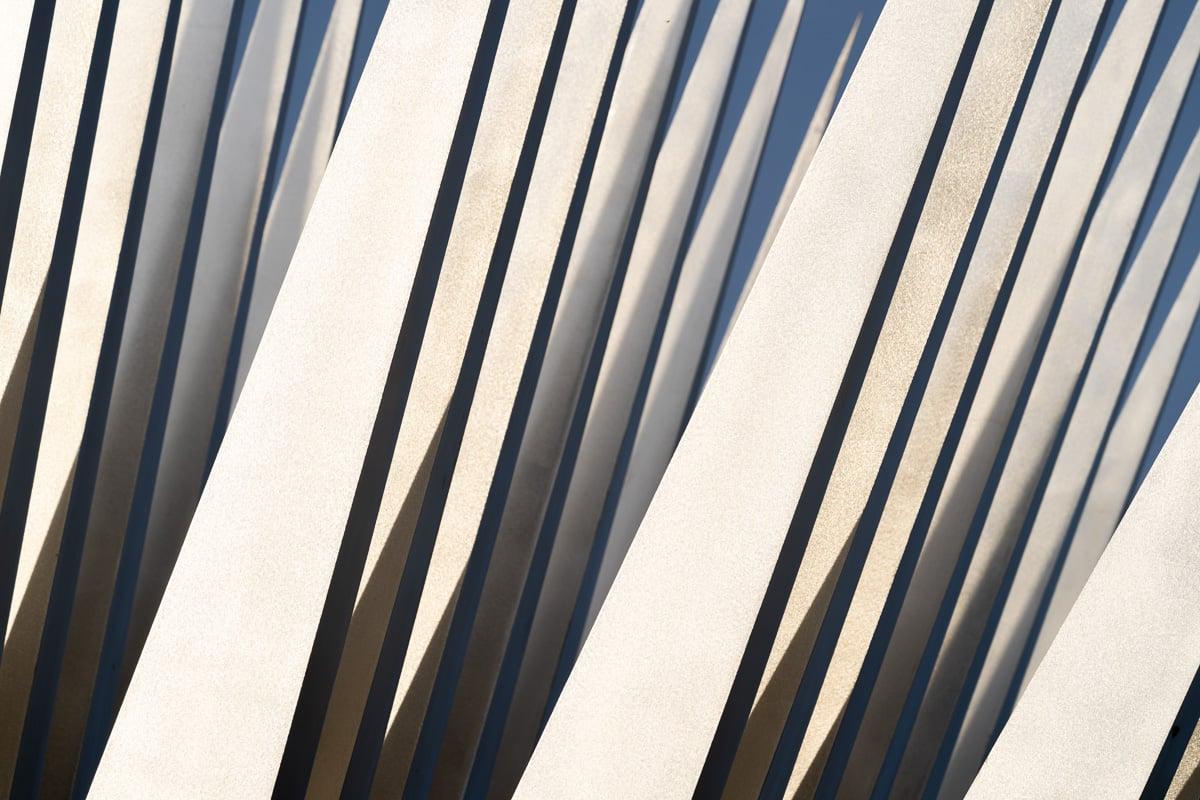
Jan Palach memorial, Prague. 256 mm, f/8, 1/400 sec, ISO 100
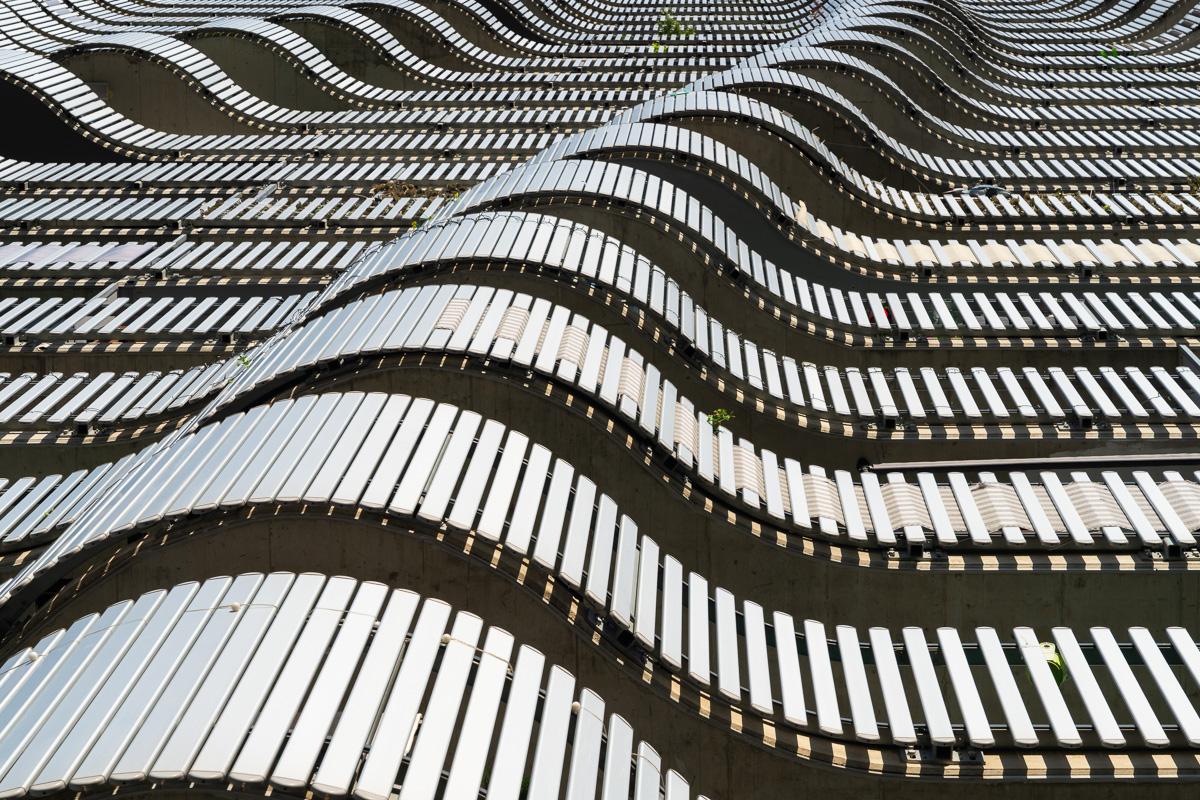
Waves of balconies, Vienna. 81 mm, f/11, 1/250 sec, ISO 100
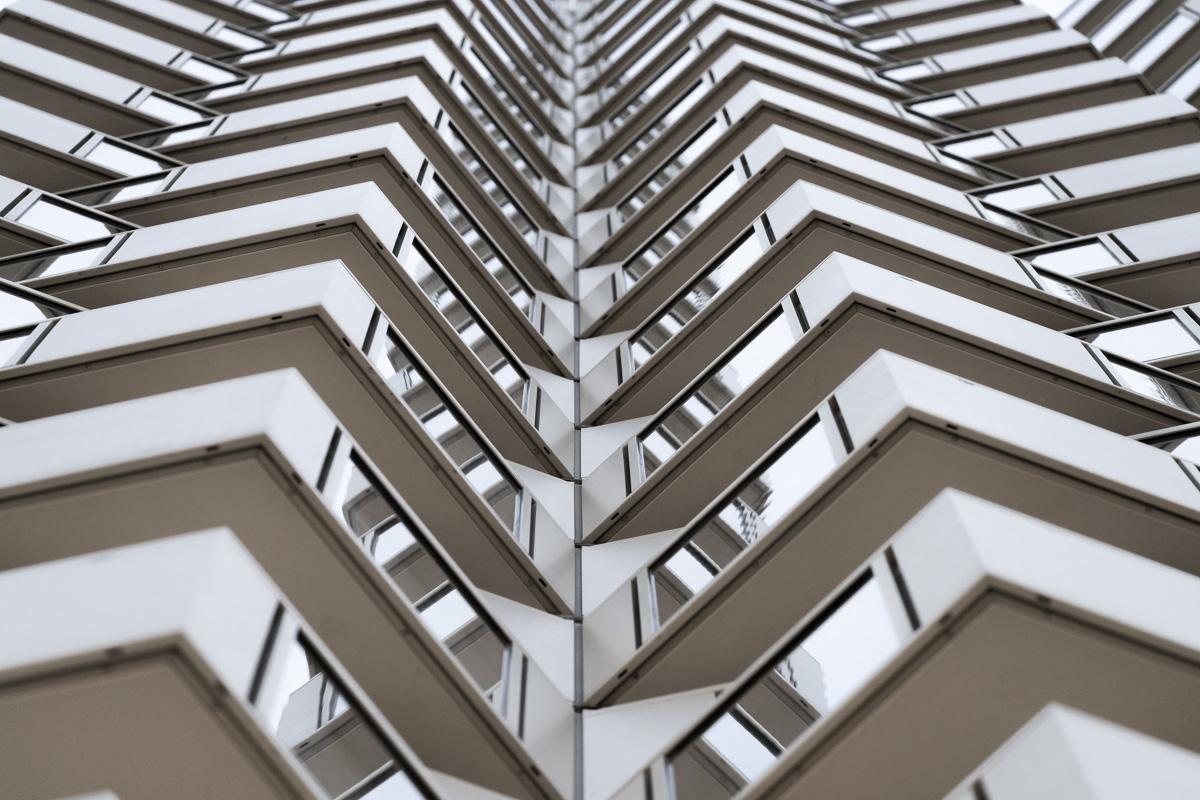
Chevrons from below, Vienna. 400 mm, f/11, 1/500 sec, ISO 1000
Next time a building bores you, look at it through your longest lens for five minutes. You may come away with nothing. You may not.
📅 Calendar 2027: the hardest cut of the year
Pre-orders opened on 1 September, and as promised, this is the reminder.
The selection worked exactly like the culling above, only stricter. I went through every project from this year and the end of last year and put my favorites into one Lightroom collection. There were 46.
In the second round I went through only those. Every photo that made me think "this one has to be in" went into another collection, and about 15 did. Then I cut it down to twelve, dropping the ones that came from a place already covered, or that were, honestly, weaker than the rest.
Twelve photographs from seven countries: Czechia, Slovakia, Slovenia, Switzerland, Türkiye, Oman and the United Arab Emirates.
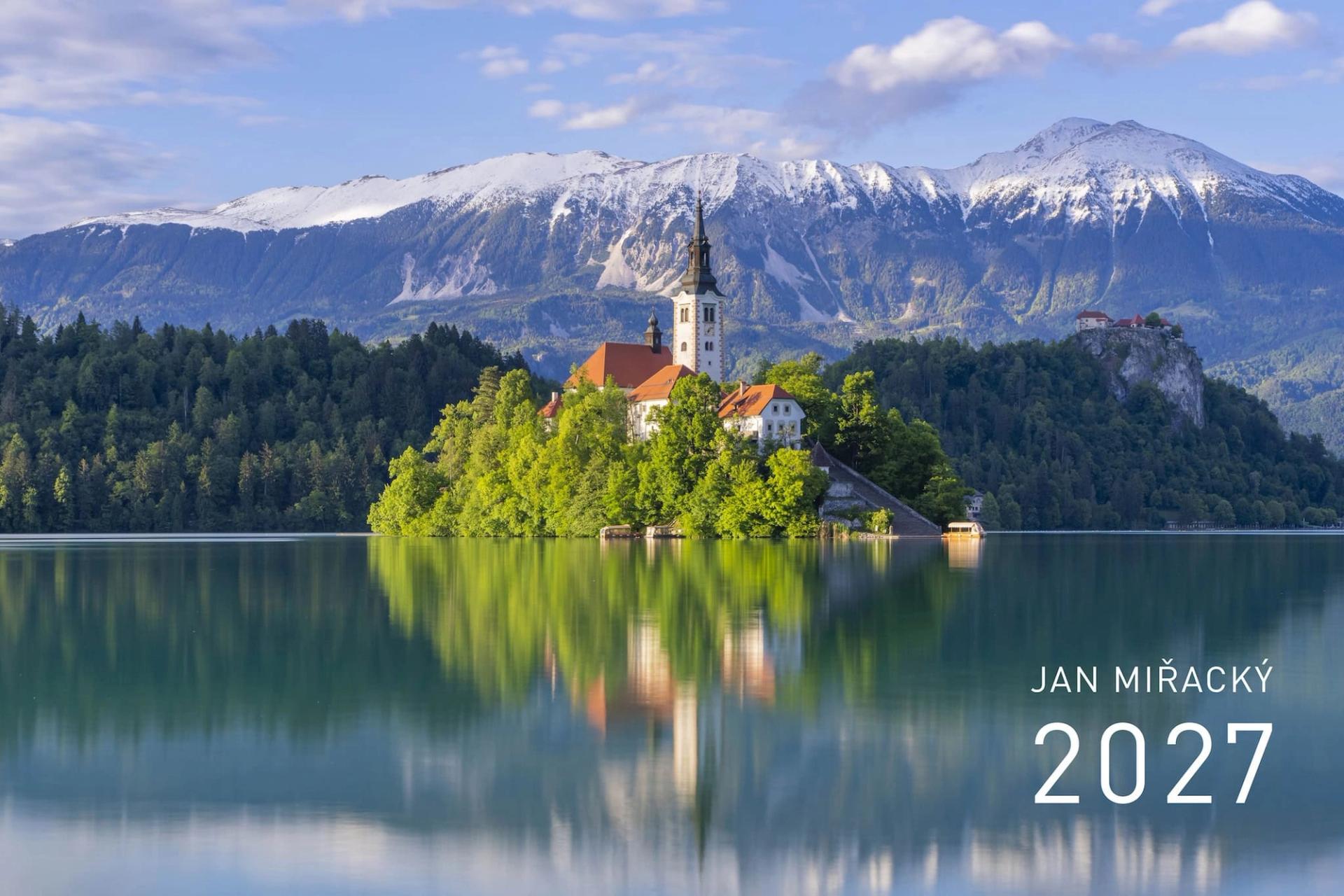
The cover: Lake Bled, Slovenia
It is hand-signed and costs 649 CZK (about €27 / $30), with shipping from €10. It is printed once, from the pre-orders only, and pre-orders close on 17 October.
Celeste from the US wrote to me: "I have decorated my work office with all of your calendars. I keep hanging new ones and my office looks amazing!"
Wrap up
In the second half of October I am in Morocco, guiding a photo tour. After that, nothing else is planned for the rest of the year.
When the Uzbekistan price is ready, the interest list hears first, and you will hear about it here.
Until then, take the camera for a walk, and give the next boring building five minutes.
Thanks for being here, as always.
P.S. If the culling section left you with 40 photos waiting for an edit, here is how I edit mine: my Lightroom post-processing guide .
Enjoyed this? Get the next one.
I send tips like these about once a month. Free, no spam, unsubscribe anytime.
Browse all past issues