🏗️ The city that refused to be photographed
Ninety minutes to rescue a ruined shoot, plus the easiest work I did all summer.
View original emailJuly + August 2026 newsletter
I'm writing this from my desk in Prague, where I have spent far more of this summer than I planned to.
The last time you heard from me I was at Zurich Airport, waiting for a flight home at the end of a 26-day tour. This issue starts on the last afternoon of that trip, which I had written off before it began.
In this issue: what I did when Zurich refused to be photographed, four frames that came out of it, a job that was worth far more to the client than it cost me, and new dates for Italy. Plus an honest Uzbekistan update I owe you.
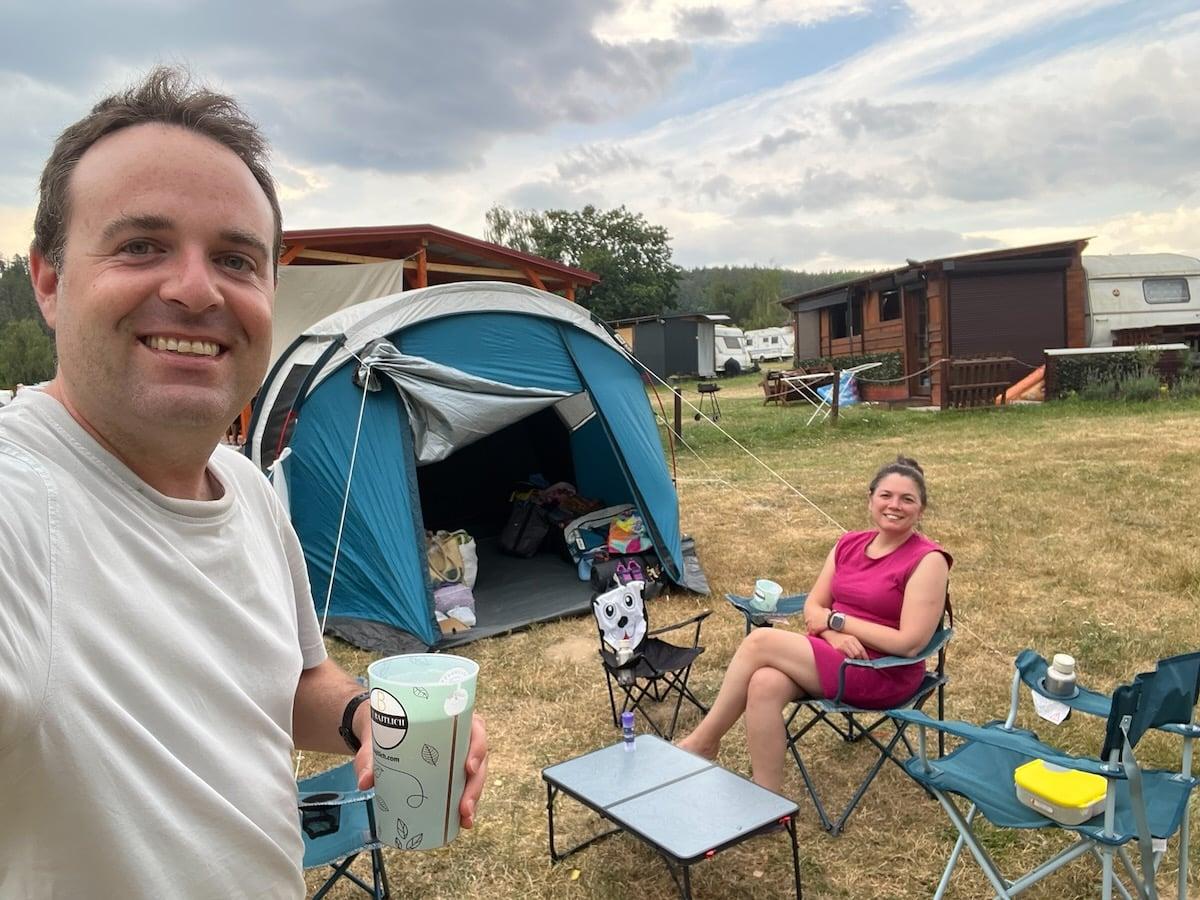
From our camping trip one hour from Prague
🏗️ The afternoon a city refused to be photographed
We drove into Zurich before lunch on the last day of the tour, and I had the evening written off before we parked.
It was the final stop of twenty-six days on the road, the last evening with Randy and Judy, who had stayed on for the closing stretch. The evening you most want to end well. From the car it already looked wrong: scaffolding everywhere, and cranes standing where the skyline should have been.
I dropped my bag and went out to walk the old town. We were shooting golden hour and blue hour that evening and I needed to know where to stand.
It was worse on foot. The Grossmünster, the church the whole old town arranges itself around, was wrapped for restoration. The Rathausbrücke, the bridge you cross to line that church up with the old houses along the Limmat, was being rebuilt too. Every wide composition I had in my head ran into a crane, and no angle lost it.
Then I had to go to lunch and tell them.
That was the worst part of the day. Not the cranes. Sitting down with two people at the end of a long trip and preparing them for the possibility that their last evening had nothing in it. I was not feeling sorry for myself. I was sorry for them, that a long and good journey was going to finish on a shrug.
After lunch I went back out.
I stopped at postcard racks and stood there looking at beautiful pictures of scenes forty meters away that were completely unshootable that day. Then I noticed what I was doing. I was defending photographs I had already decided to take, and every one of them needed the same wide view of the same two buildings, both behind plastic. The city had not run out of pictures. I had run out of the ones I brought with me.
So I narrowed down. Not to details and textures, because this still had to look like Zurich and not a set of abstracts, but to smaller scenes that held up on their own. For each one I asked two questions: how will the light sit here tonight, and can I frame this without a crane in it.
The first answer was disappointing. Golden hour was not going to work in that part of the city. Blue hour would.
The second answer changed how I composed all evening. Most of these scenes only worked vertically, and in several of them one crane started just outside one edge of the frame and another just outside the opposite one. The composition was not light-driven that night. It was crane-driven, and once I accepted that, the frames came quickly.
An hour and a half later I had four locations. Not four ideas, four places I had stood in, in the orientation I would use, at the hour it would work.
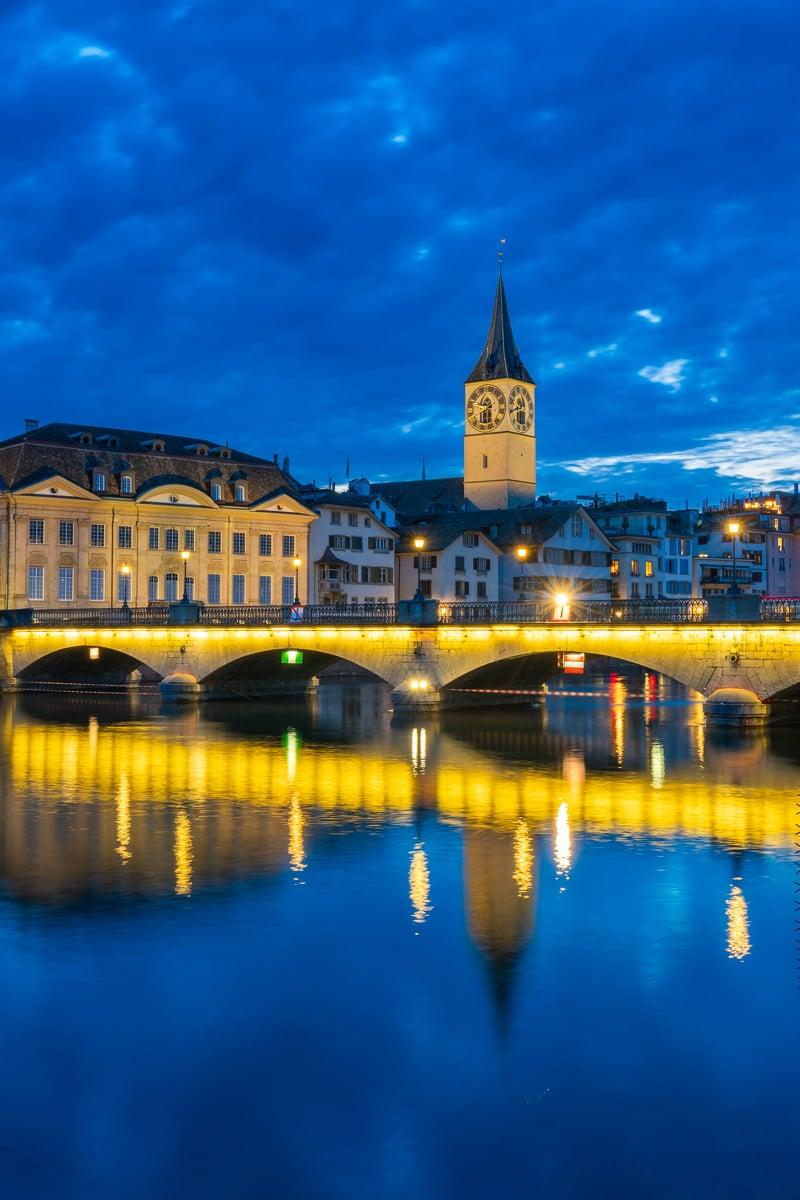
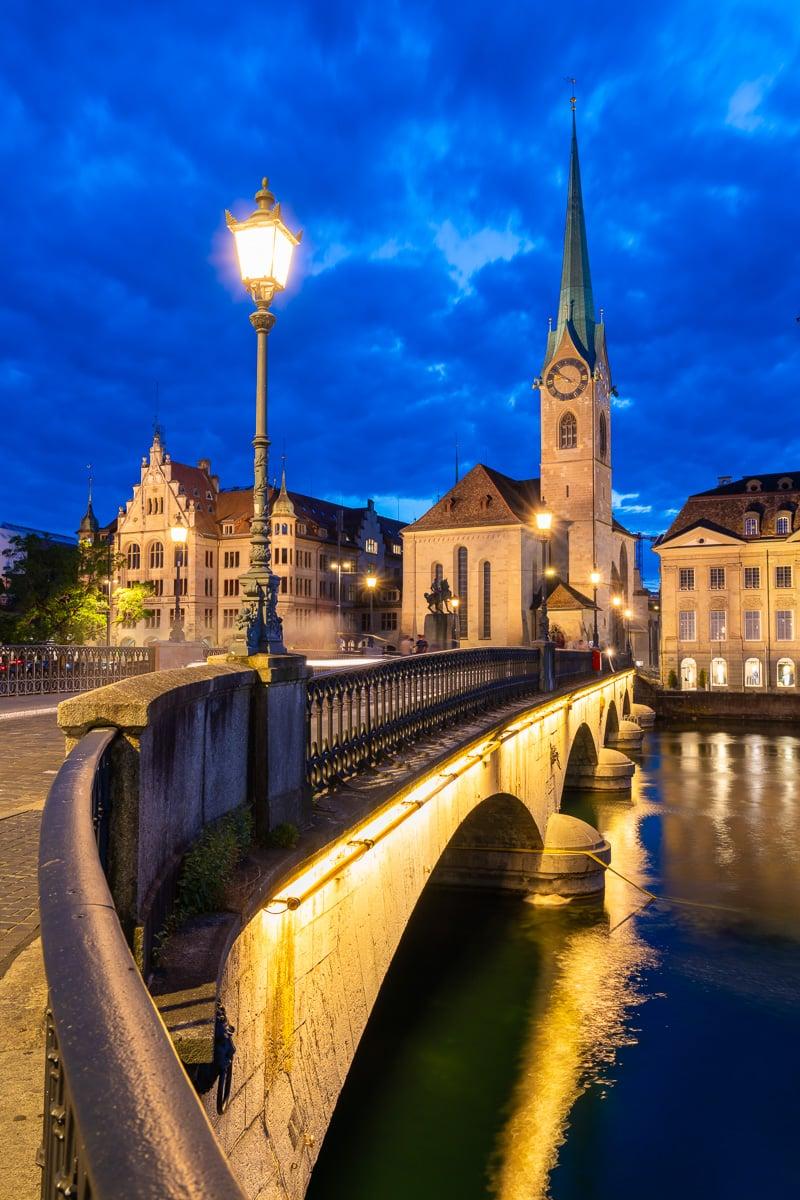
The honest trade-off
Four frames is not a portrait of a city. If you came to Zurich for the photograph of Zurich, the one everybody recognizes, you did not get it and you were never going to. Scaffolding comes down eventually and that picture will still be sitting there for somebody else. You also give up the format you would normally choose, and one of the two best hours of the day.
What you get instead is a set of frames nobody else has, because almost nobody photographs a city while it is being repaired.
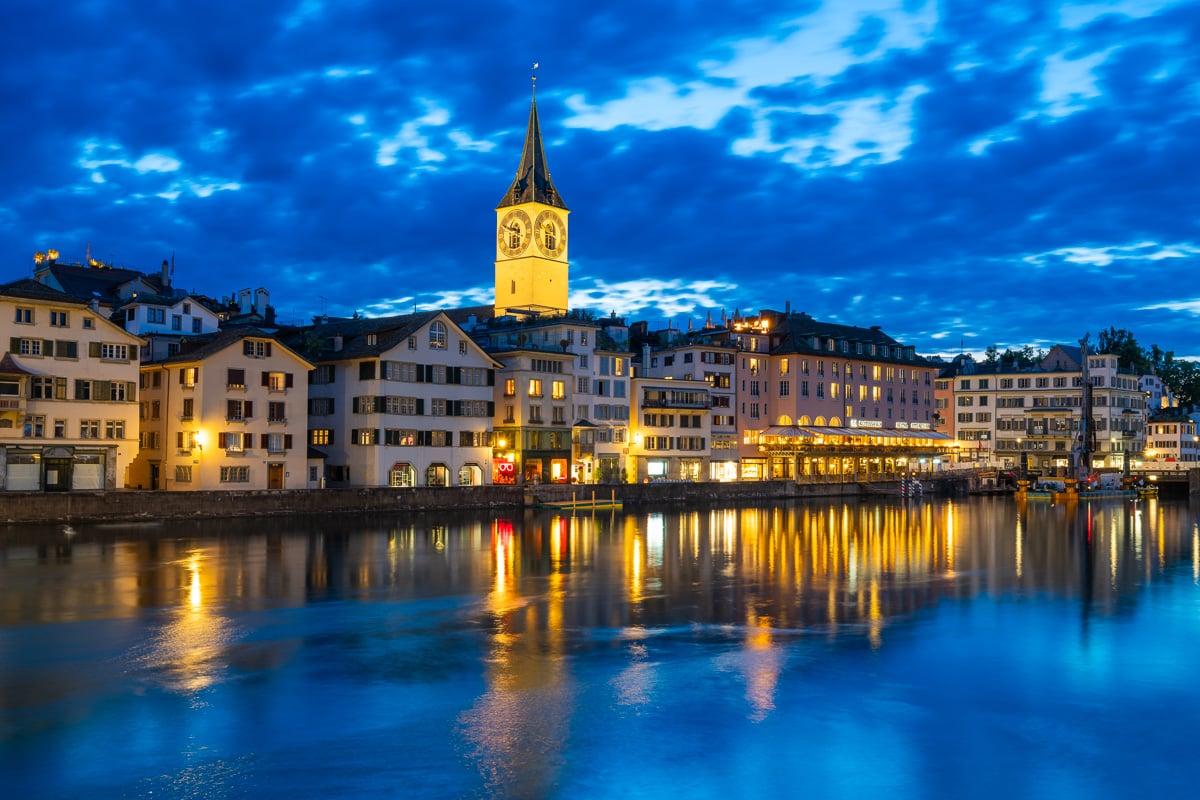
Zurich, Switzerland. 32 mm, f/11, 13 sec, ISO 100
In a situation that looks impossible there are usually a few frames that still work. They are never the ones you planned, and the only way to find them is to keep walking and keep looking. Ninety minutes of that beat a whole afternoon of being disappointed, and I very nearly chose the afternoon.
We shot all four locations that evening, and Randy went home with pictures of Zurich he was pleased with. That was the part I actually cared about.
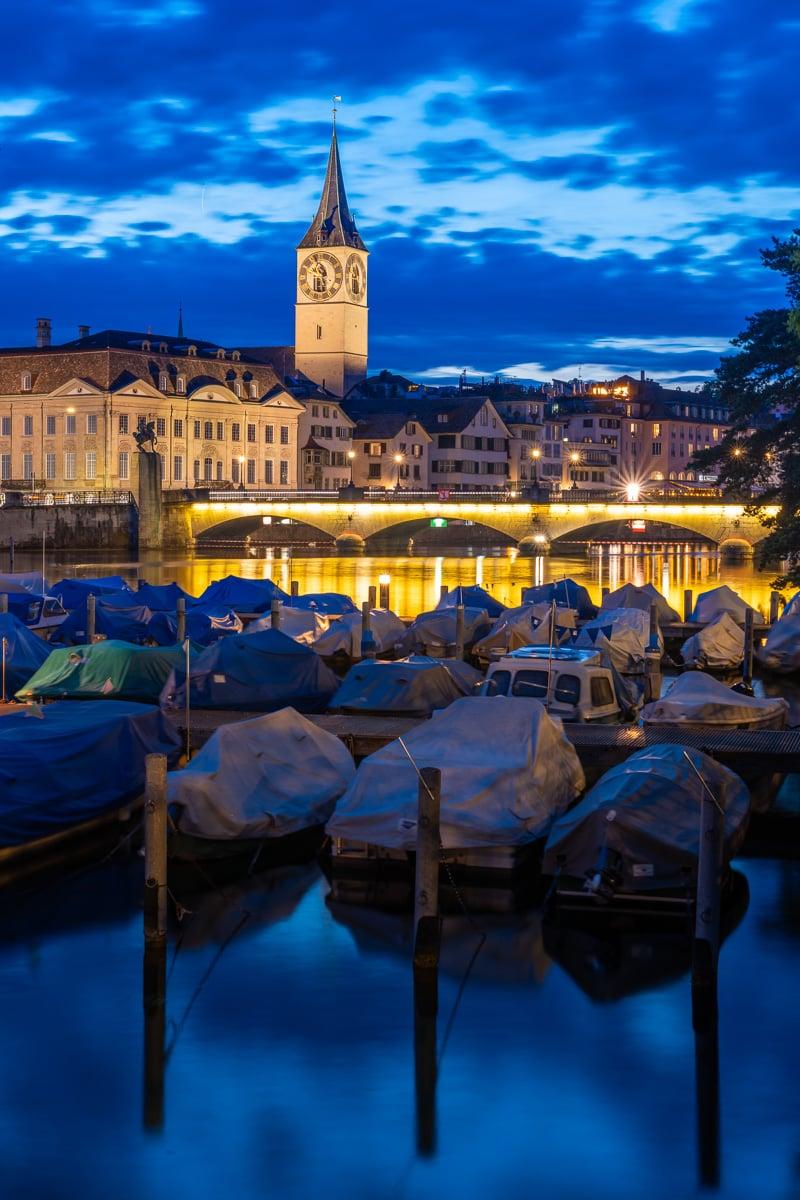
Zurich, Switzerland. 51 mm, f/11, 13 sec, ISO 100
📍 I got paid well to walk around my own city
On a Friday evening I got an email from the HR manager at a company with an office here in Prague. A man named Dave was landing on Monday afternoon. Could I show him a few places around the city?
That was the whole brief. I did not know what was being shot, for whom, or for how long.
I said yes because I had never done it before. That was the entire appeal.
It was a commercial. I learned that on Monday, when I met Dave, who had flown in from Oregon, and we sat down for a three hour briefing. Then the questions started. This is the one I keep coming back to:
Where is there a quiet street with paving stones and a big glass shopfront, where the buildings look enough like Prague that you know where you are?
I knew the answer. I have known the answer for years without ever thinking of it as an answer to anything.
So I put together proposals for what could be shot where, and we went into the center so Dave could walk the shortlist and rule things in or out.
The next morning we started before seven, with the models, at Charles Bridge.
That is where the job stopped being a list of locations. I was keeping an eye out for police who might come over and ask about a permit. I was booking the Bolt rides between locations so nobody stood around waiting. And on some of the shots I was pulling focus by hand.
That last part came with an education. Dave handed me a handwheel, a wireless follow focus unit along the lines of a Tilta Nucleus-M II. I did not know that category of tool existed. Sixteen years behind a camera and I had never had a reason to learn that focus on a video set is often a second person's entire job.
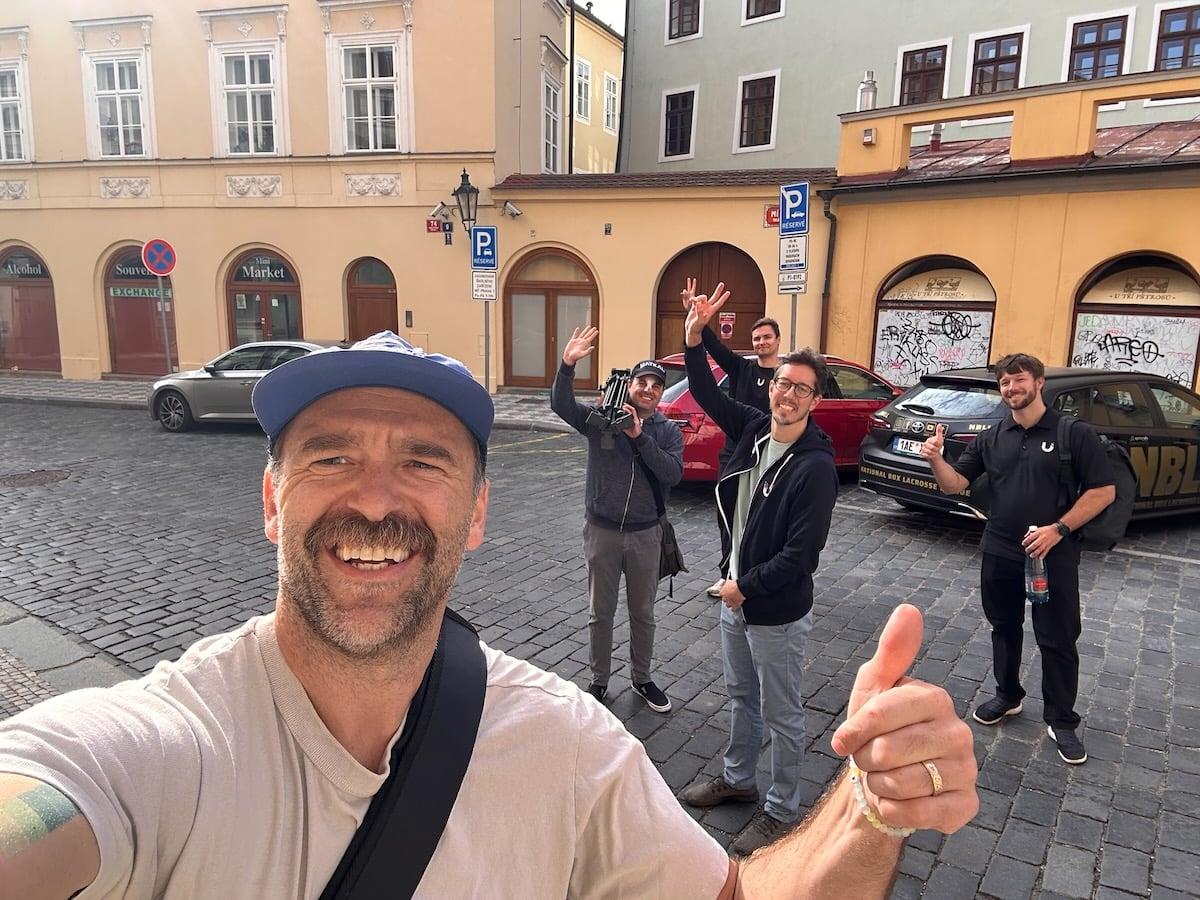
Dave and the crew on the first morning. Prague, July 2026.
Three days, about ten hours of my time in total. That is what the job cost me, in a city I have photographed for over a decade. On Dave's side it was four days to shoot everything, in a place he had never been.
I cannot picture him finding all of that alone and still getting what he needed in the time he had.
That gap is the whole business, and I had been walking past it for years. Local knowledge is worth close to nothing to the person who already has it, and close to everything to the person with four days and a crew waiting.
What it is and what it isn't
You are not the author. Your name is nowhere on the film, you do not own a frame of it, and nobody who sees the ad will ever know you were there. If that sits badly with you, skip this one.
What you get is a day rate, no post-production, and no revisions on your own pictures. You also get to watch how useful you are, in real time, all day. That almost never happens when you work alone.
If you want this kind of work
Two things, and neither is hard.
Be findable. The woman from HR found me through my own website, as a photographer in Prague. Or possibly through 53 Best Prague Photo Spots , a guide I wrote years ago and keep adding to. I am not sure which, and it does not matter. Both said the same thing to a stranger with a deadline: this man knows where to point a camera in Prague.
Notice where we started shooting. Charles Bridge, which is number one on that list.
So your site has to say, in plain words, that you are a travel or architecture photographer in a named city. Not "visual storyteller." Not "creating timeless imagery." The name of the city and the thing you photograph, in words a search engine can read. And if you have ever written a proper guide to shooting your own town, that article is doing more sales work than your portfolio is.
Say that you will do it. If you would take this work, put location scouting on your services page as its own line. It costs you one paragraph, and it is the only way somebody searching for exactly that finds out you do it.
(I have not done that second one yet. Fair enough.)
One question, and I'm curious about your answer. Has a closed road, a wrapped monument or a ruined plan ever pushed you into a photograph you would not otherwise have taken? Hit reply and tell me. I read every one, though when I am on the road it can take me weeks to answer.
🌍 Four things before I let you go
🇮🇹 Italy, March 2028
New dates for two tours I have run before, and I put them back to back on purpose.
Tuscany, 21 to 26 March 2028, six days. Val d'Orcia before sunrise while the fog is still sitting in the cypress ridges, the hill towns, and Florence at the end. From €4,995.
Pisa and Cinque Terre, 26 to 29 March 2028, four days. Manarola when the evening light reaches the painted facades, the harbor walls at Vernazza and Riomaggiore, and Pisa in soft morning light. From €1,995.
The second one starts on the day the first one ends, so you can take them as one seamless nine-day trip on a single flight, or either one on its own. Eight photographers maximum on each.
🇺🇿 Uzbekistan, October 2027
Last time I told you this issue would have dates, an itinerary and costs. It does not, but the work is moving again and that is the part worth telling you.
The full page goes live before the end of September, and everyone who has already registered interest hears from me before it is public. Around eleven days through Tashkent, Samarkand, Bukhara and Khiva, starting in the second half of October 2027, ten people maximum, designed for photographers and their non-photographing partners.
If you want to be on that list, register your interest here .
🌐 Everything is in one place now
I rebuilt janmiracky.com from scratch this summer, by myself, and that is where most of the missing photography time went. The part that might matter to you: every tour I run, across all of my brands, now sits on one page instead of scattered across three separate sites. The published work is there, and so is the full newsletter archive , in case you want to go back and find that Auto ISO issue.
📅 Calendar 2027, pre-orders open 1 September
Twelve photographs from seven countries, 45 × 30 cm, hand signed, printed once from the pre-orders and not reprinted afterwards. I will send a proper reminder when it opens. If you would rather not wait, join the waitlist now .
Wrap up
Less photography this summer than I wanted, and more desk than I expected. But Zurich taught me something I will use for years, and Prague paid me to walk around it, so I am not going to complain.
Thanks for being here, as always.
P.S. If you joined this list for the Lightroom Classic guide and never got round to reading it, here it is again, straight to the PDF with no form in the way: Lightroom Classic guide →
Enjoyed this? Get the next one.
I send tips like these about once a month. Free, no spam, unsubscribe anytime.
Browse all past issues